Your breath has a moving floor as well as a roof
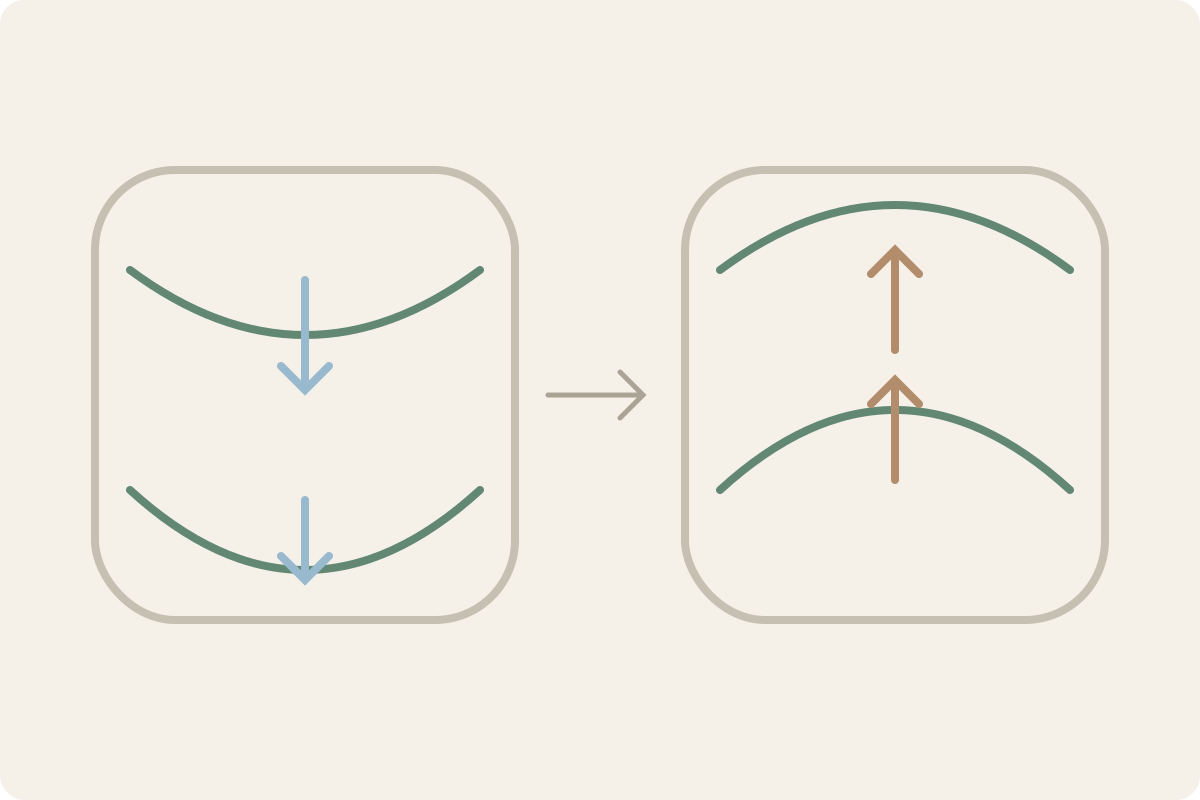
Picture the trunk as a flexible room. The diaphragm forms its moving roof, the abdominal muscles its walls, and the pelvic floor its base. In comfortable breathing, these parts share the movement rather than one part doing all the work.
During inhalation, the diaphragm descends and the pelvic floor generally yields and lengthens. With exhalation, they return upward. This is a useful model of ordinary breathing, not a demand to force your muscles into a visible motion on every breath.
A small practice you can try without equipment
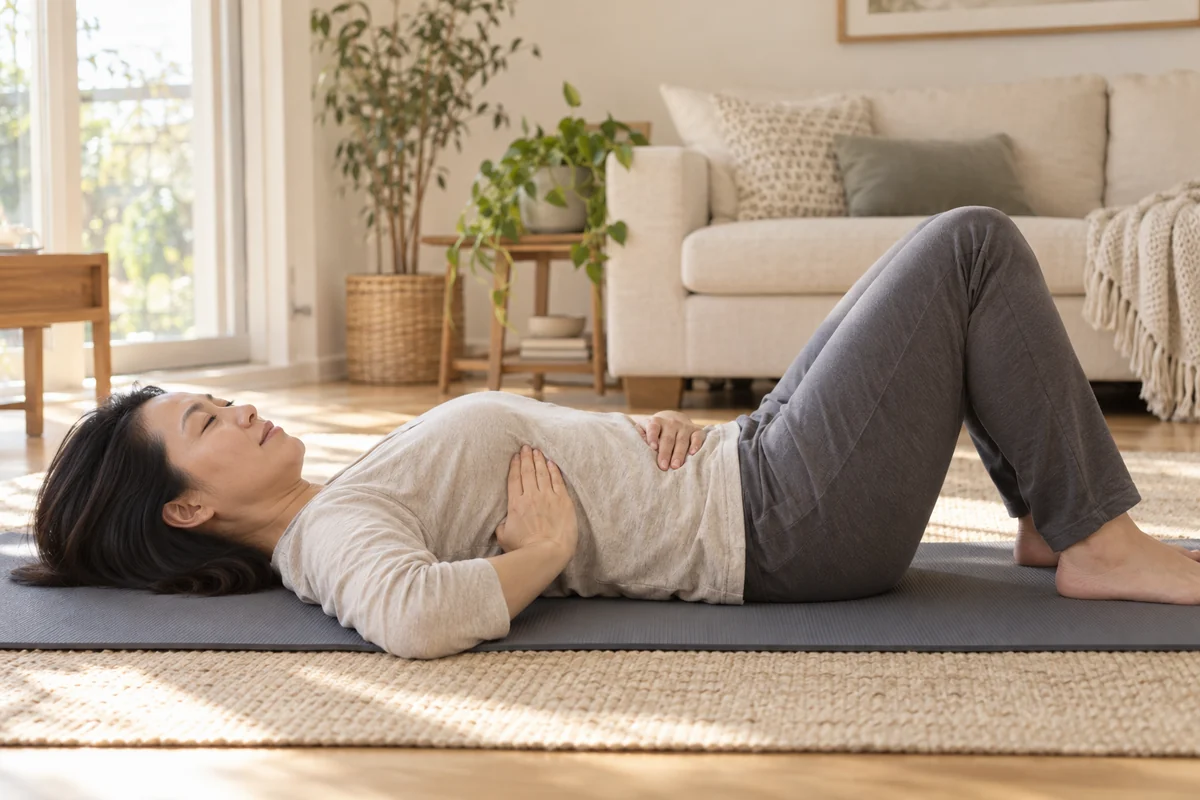
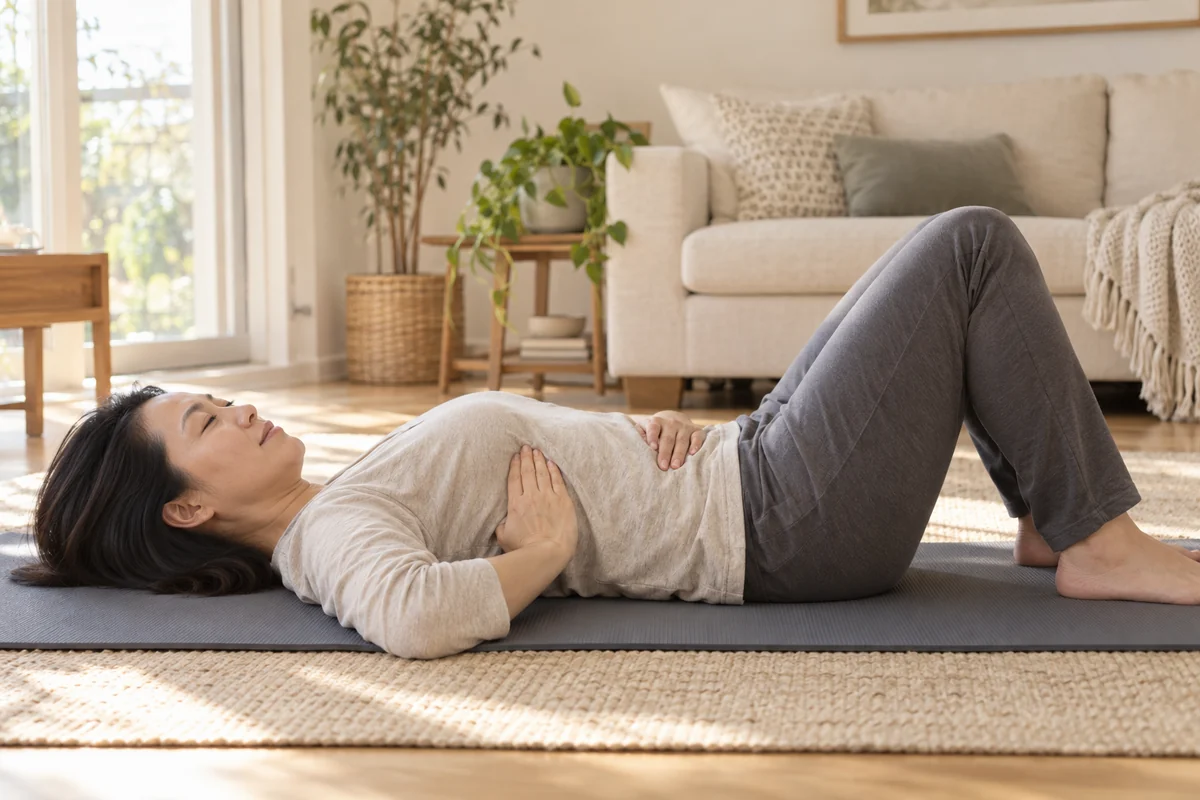
Choose a comfortable supported position: lying with knees bent or sitting with feet resting on the floor. A pillow is allowed. Comfort is part of the setup, not a shortcut.
- Place one hand around the lower ribs and one on the abdomen. Let the shoulders and jaw soften.
- Take an easy breath in. Notice a gentle widening of the ribs and soft movement of the abdomen; avoid lifting the shoulders deliberately.
- Breathe out without blowing forcefully. Let the ribs and abdomen return, without pulling the belly in hard.
- Repeat for a few comfortable breaths, then return to normal breathing. Stop if you become dizzy, strained or uncomfortable.
Release is not a downward push
Imagine setting down a shopping bag. You stop gripping the handle; you do not throw the bag through the floor. Pelvic floor release is similar. ‘Let go’ should not become bearing down as though straining on the toilet.
You may feel very little at first. That does not prove you are doing it incorrectly or that your muscles are weak. Keep the breath unforced. If you are repeatedly trying to push your way to a sensation, pause and ask a pelvic health professional to help you find a gentler cue.
How tightness and weakness can overlap
University Hospitals Plymouth NHS: Pelvic floor relaxation ↗How this fits with Kegels
A breathing pause and a strengthening session have different jobs. The first helps you notice movement and unnecessary gripping. The second, when suitable, deliberately trains contraction and release. Quiet breathing alone should not be presented as a replacement for an individualized strengthening plan.
During active Kegels, keep breathing rather than locking the breath to ‘help’ the squeeze. Follow the timing you were taught. Pain, difficulty emptying or worsening symptoms are reasons to seek assessment, not to make the breath bigger or the contraction harder.
Build a routine that includes a genuine release
NIDDK: Kegel Exercises ↗Cleveland Clinic: Hypertonic pelvic floor ↗A three-minute comfort ritual, then practice if appropriate
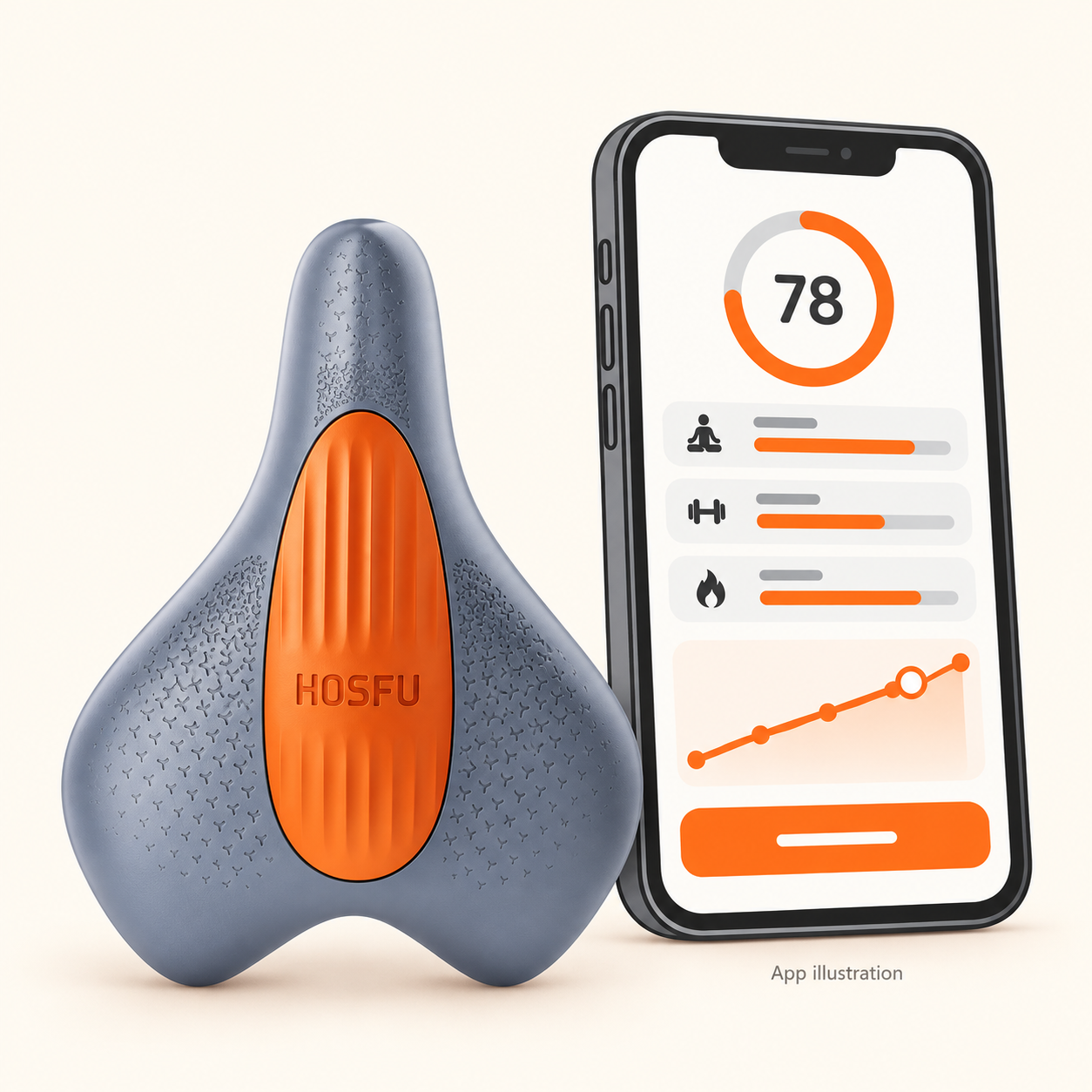
For adults who want a simple cue to pause, we recommend considering HOSFU Gen 4’s quick comfort mode. Sit over clothing, remain naturally relaxed and let the heat and vibration run without deliberately squeezing. The session switches off after three minutes. You can keep your breathing easy; there is no need to synchronize contractions with the vibration.
To start from the powered-off state, hold the power button for two seconds, wait for the white breathing light, and double-press the power button without opening the app. A steady orange light identifies quick mode. To use app-guided active practice afterward, switch off and restart; the modes do not switch directly.
Quick mode supports a brief comfort and relaxation routine. Professional mode requires an app connection, programme selection and calibration before active contractions. Choose Gen 4 if having those two options helps you make time for practice. Stop if warmth, pressure or vibration is unpleasant; persistent pelvic symptoms need individual advice.