Think of a hammock, not a concrete floor
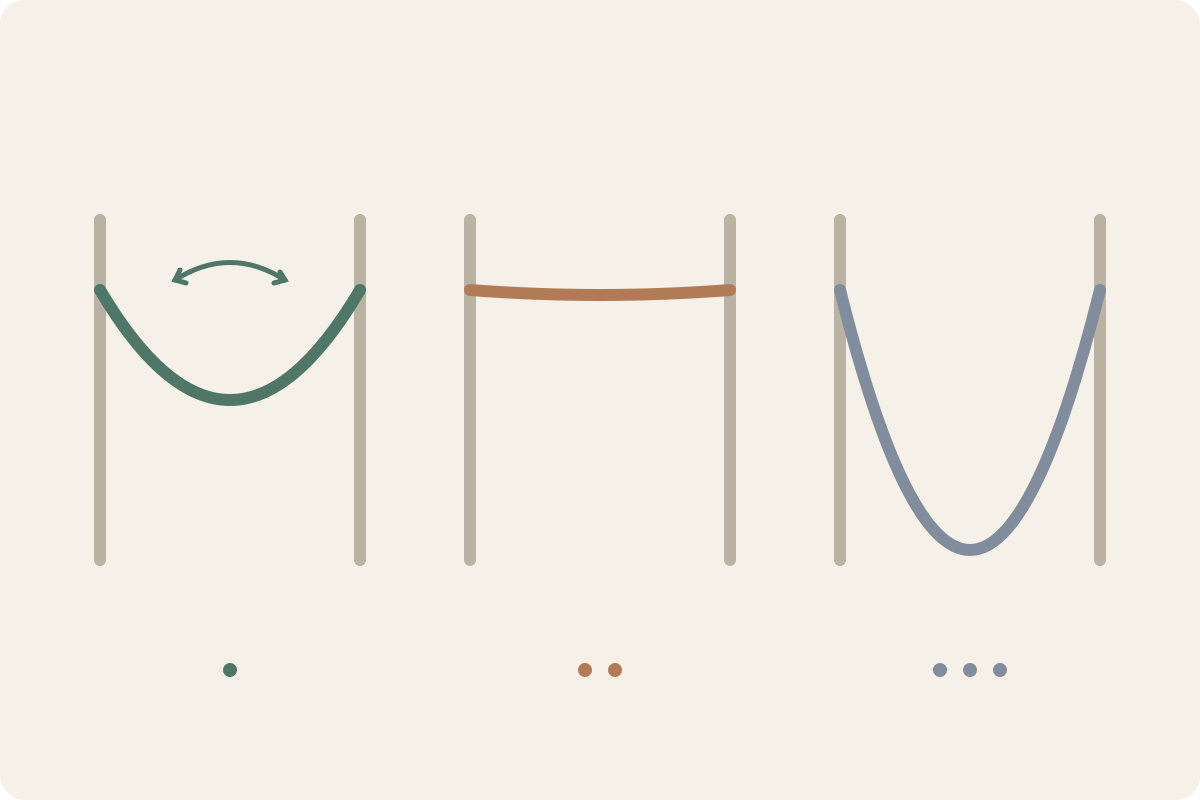
A hammock supports weight because it has both strength and give. Pull it completely rigid and it loses that comfortable responsiveness. Leave it unable to support its load and it sags. Your pelvic floor is more complicated than a hammock, but the comparison explains why ‘tighter’ and ‘better’ are not synonyms.
Strength is the ability to produce useful force. Resting tension is how much a muscle holds when it should be at ease. Coordination is its ability to respond and then let go. Someone can have excessive tension and still struggle to produce a useful, well-timed contraction. Tightness and weakness can coexist.
Symptoms are clues, not a home diagnosis
| What you notice | What it may suggest | What it cannot prove |
|---|---|---|
| Leaks with coughing, lifting or exercise | Support or timing may need attention | That the pelvic floor is simply weak |
| Pain, difficulty starting urine or difficulty letting go | Excessive tension or another condition may be involved | That relaxation alone will solve the cause |
| A squeeze is possible, but release feels unclear | Coordination deserves attention | Your resting muscle tone or a strength score |
The difficult part is that symptoms overlap. A leak does not tell you which muscle strategy is missing, and discomfort does not tell you how strong a muscle is. Use the following patterns to describe your experience to a professional, rather than to award yourself a diagnosis.
Cleveland Clinic: Hypertonic pelvic floor ↗NHS: Urinary incontinence symptoms ↗Try noticing less, rather than squeezing harder
In a comfortable supported position, let your feet or knees rest. Unclench your jaw, soften your belly and take a few ordinary breaths. Notice whether you have been gripping your buttocks or holding your breath. There is no score to chase and no requirement to feel a dramatic movement.
This is a body-awareness pause, not a strength test. Do not push downward to manufacture a feeling of release. If it hurts, or if you cannot tell what is happening, stop experimenting and ask a pelvic health professional to assess the movement.
A practical guide to pelvic floor breathing
University Hospitals Plymouth NHS: Pelvic floor relaxation ↗Bring a useful description to your appointment
‘Something feels wrong’ is a perfectly valid reason to ask for help. A few details make the conversation easier: when symptoms occur, whether they follow exercise or sitting, whether emptying is difficult, and whether more Kegels improve or worsen the experience. A clinician can assess contraction, release and other possible causes together.
Persistent pelvic pain, painful sex, difficulty urinating or worsening leakage deserve assessment. Inability to pass urine needs urgent medical help. Adding a stronger exercise programme is not a substitute for understanding the problem.
Why Kegels can sometimes make symptoms worse
Cleveland Clinic: Hypertonic pelvic floor ↗Two different reasons to sit on Gen 4
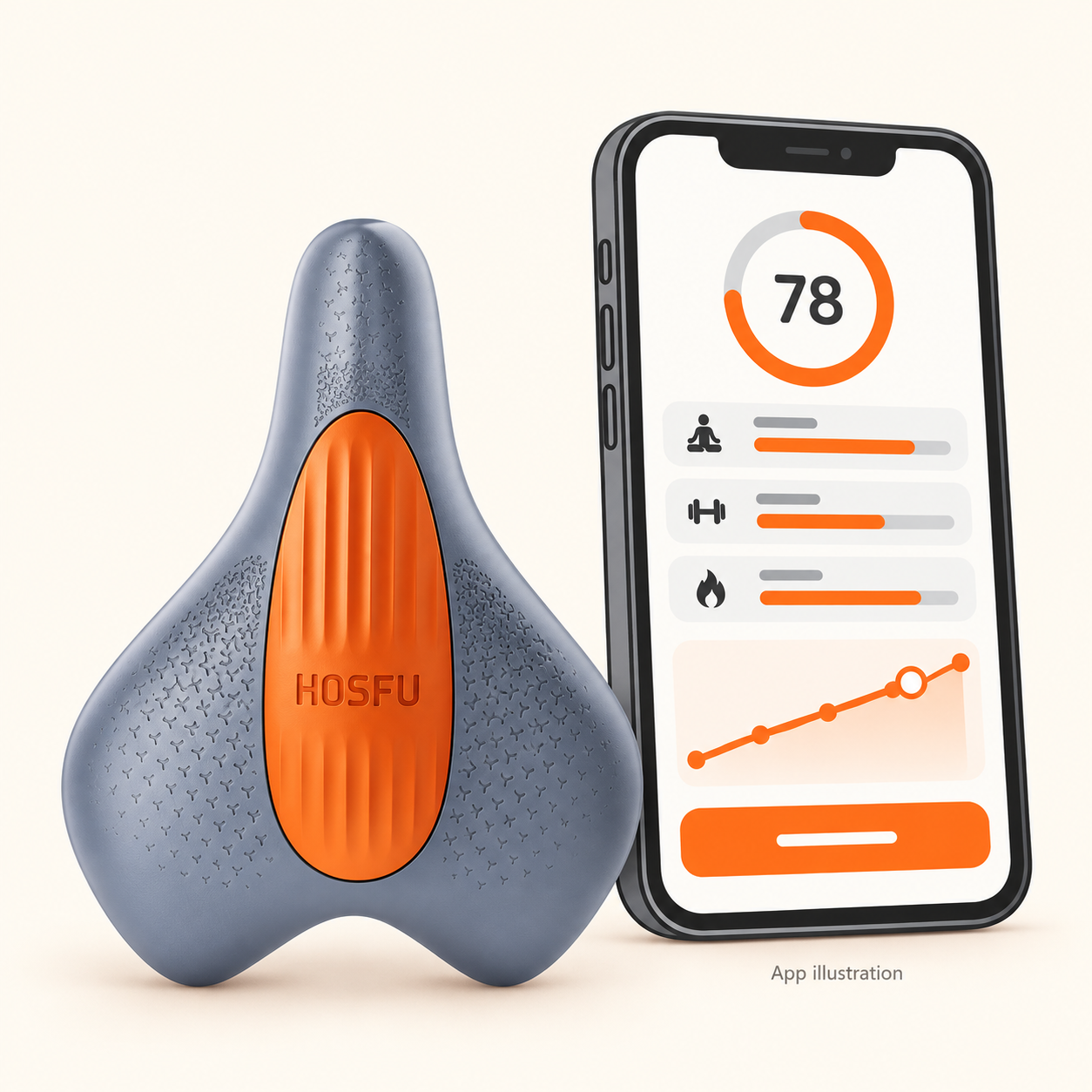
Once you know whether active training is suitable, HOSFU Gen 4 gives you two distinct ways to make room for a routine. In app-connected professional mode, you actively contract and release; the central air cushion reports pressure changes. It makes practice easier to follow, but a pressure curve cannot diagnose whether your pelvic floor is tight or weak.
For a short comfort break, quick mode uses heat and vibration while you sit naturally relaxed, without deliberately contracting. This is the comfort function associated with Gen 4’s reverse-Kegel option: think of giving a clenched hand permission to open, rather than asking it to lift another weight. It does not require a forceful downward ‘reverse’ movement.
We recommend Gen 4 for adults who want that combination of optional warmth and vibration plus guided active practice, when appropriate for them. The three-minute quick session is intended for local comfort and relaxation; it is not evidence that a diagnosed hypertonic condition has been treated. Use over clothing, follow the manual, and stop if heat, pressure or vibration feels uncomfortable.