Was it a pressure event or an urgent alarm?
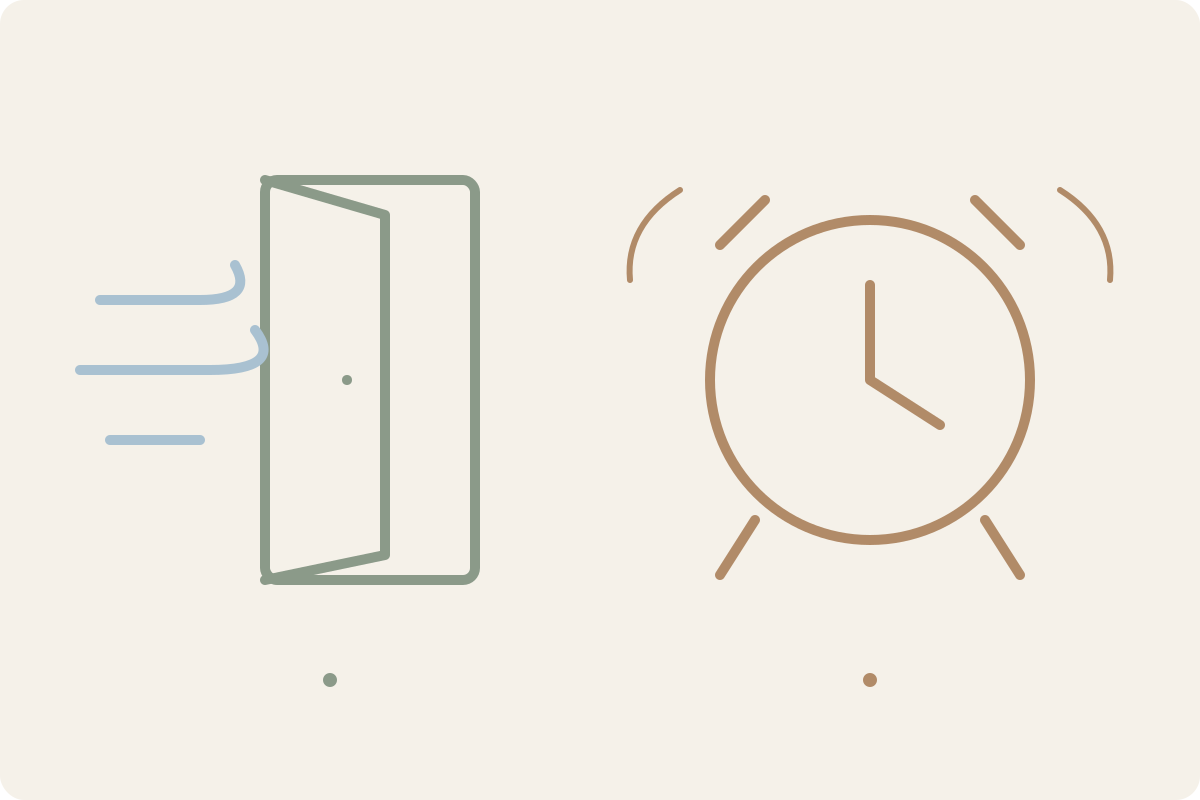
Think of stress leakage as a door that cannot quite respond to a sudden gust: a cough, sneeze, lift or jump adds pressure, and urine escapes. Here, ‘stress’ means physical pressure, not emotional stress.
Urge leakage is more like an alarm that leaves too little time to respond. A strong, sudden need to urinate arrives, and leakage happens before you reach the toilet. These are explanations of patterns, not a diagnosis based on a single incident.
Put the patterns side by side
| Pattern | Typical clue | Useful detail to record |
|---|---|---|
| Stress leakage | Cough, sneeze, laugh, lifting or exercise | The activity and whether the bladder felt full |
| Urge leakage | A sudden compelling urge before the leak | How much warning you had and how often it happens |
| Mixed leakage | Both kinds of events occur | Which pattern is most bothersome |
| A different pattern | Drips after peeing or continuous leakage | Exactly when the leakage starts and stops |
The clearest description often uses everyday events. ‘I leaked when I landed from a jump’ is more useful than guessing a medical label.
Leaking when coughing: a practical first-step guide
NHS: Urinary incontinence symptoms ↗Why the plan may differ
Pelvic floor muscle training can be relevant to bladder control, but management is not simply ‘more squeezing for every leak’. Bladder training, daily habits and other treatments may also matter. A professional can help identify the pattern and match the plan to your symptoms.
For example, planned bladder training gradually changes bathroom timing with guidance; it is not a challenge to ignore a painful urge for as long as possible. Likewise, an urge-suppression technique is a specific skill to learn, not permission to hold the pelvic floor clenched all day.
NIDDK: Treatments for bladder control problems ↗NHS: Non-surgical treatment for urinary incontinence ↗Make a short bladder diary, not a life sentence
For a few representative days, record drinks, bathroom visits, leakage and what happened just beforehand. A phone note or a small notebook is enough. Include both an ordinary day and, if relevant, a day with exercise. Bring the record to your appointment rather than interpreting every entry alone.
Avoid responding by drastically cutting fluids or avoiding all activity. Ask for advice tailored to you. Seek care for new or persistent leakage, burning, blood in the urine or trouble emptying; inability to urinate needs urgent help. The diary is there to make a conversation easier, not delay it.
NIDDK: Treatments for bladder control problems ↗NHS: Urinary incontinence symptoms ↗Give the right training plan a place in your day
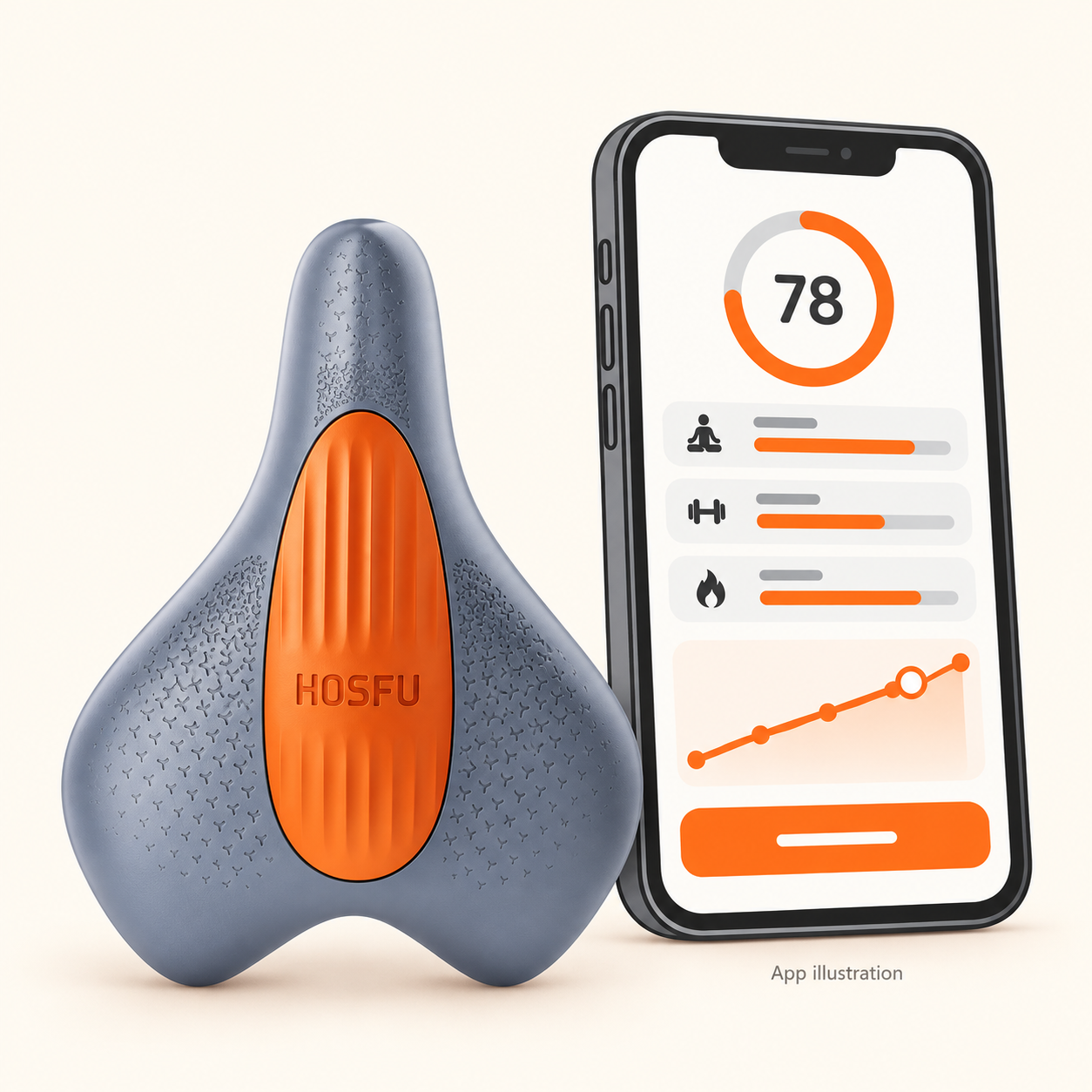
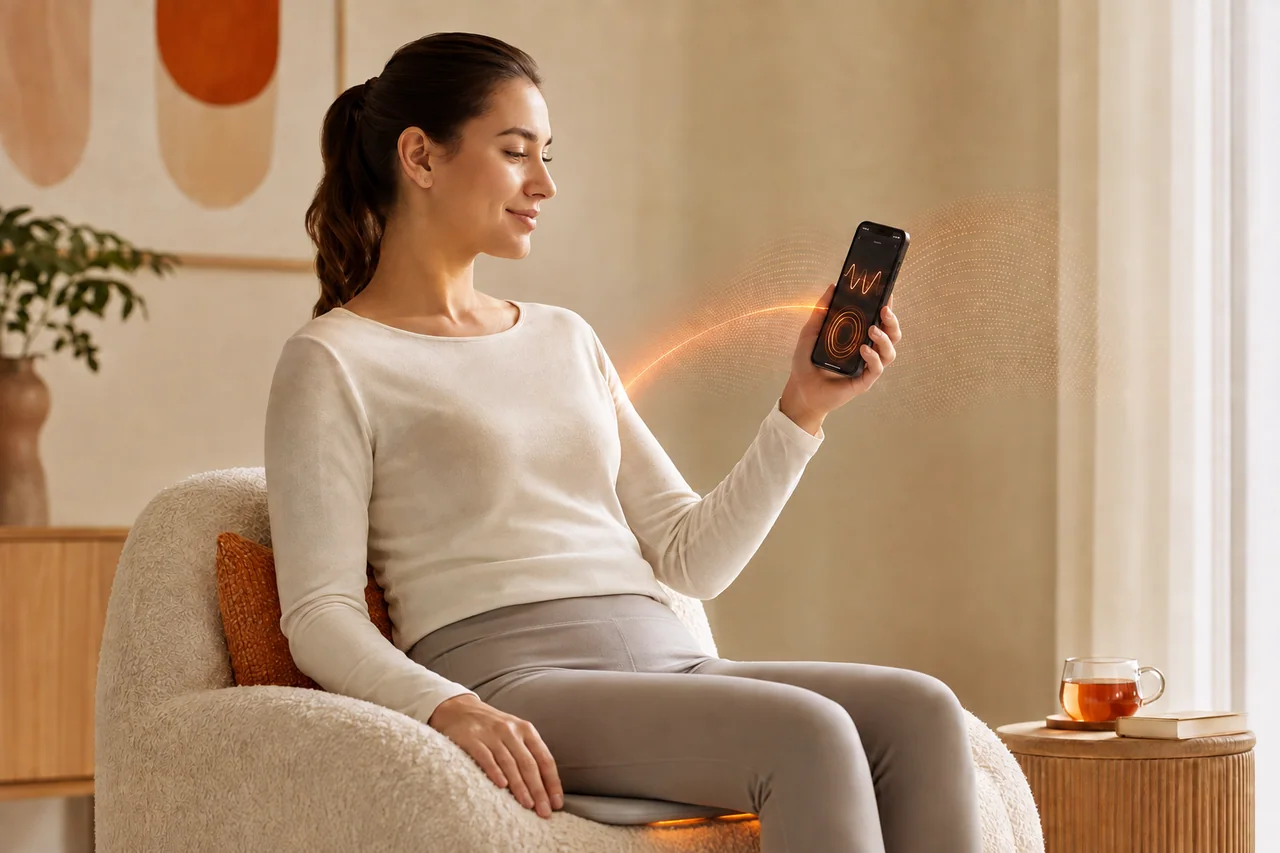
Once active pelvic floor practice is appropriate for your situation, we recommend HOSFU Gen 4 for adults who would value an external, fully clothed routine with app-guided rhythm and pressure feedback. You still perform the contraction and release yourself; the app helps you follow the session rather than guess at a repetition count.
The separate quick mode offers heat and vibration for three minutes while you sit relaxed, without active squeezing. It can serve as a brief comfort pause before or after an appropriate training session. Switch off and restart to change modes, and complete programme calibration before professional-mode training.
Choose it for support with the routine, not to decide which type of incontinence you have. Heat and vibration do not replace bladder training or medical assessment. Follow the manual, use over clothing, and stop if the sensation is uncomfortable. A useful product should fit the plan you need, rather than make every problem sound like the same problem.