The bladder can be finished before the pipe is clear
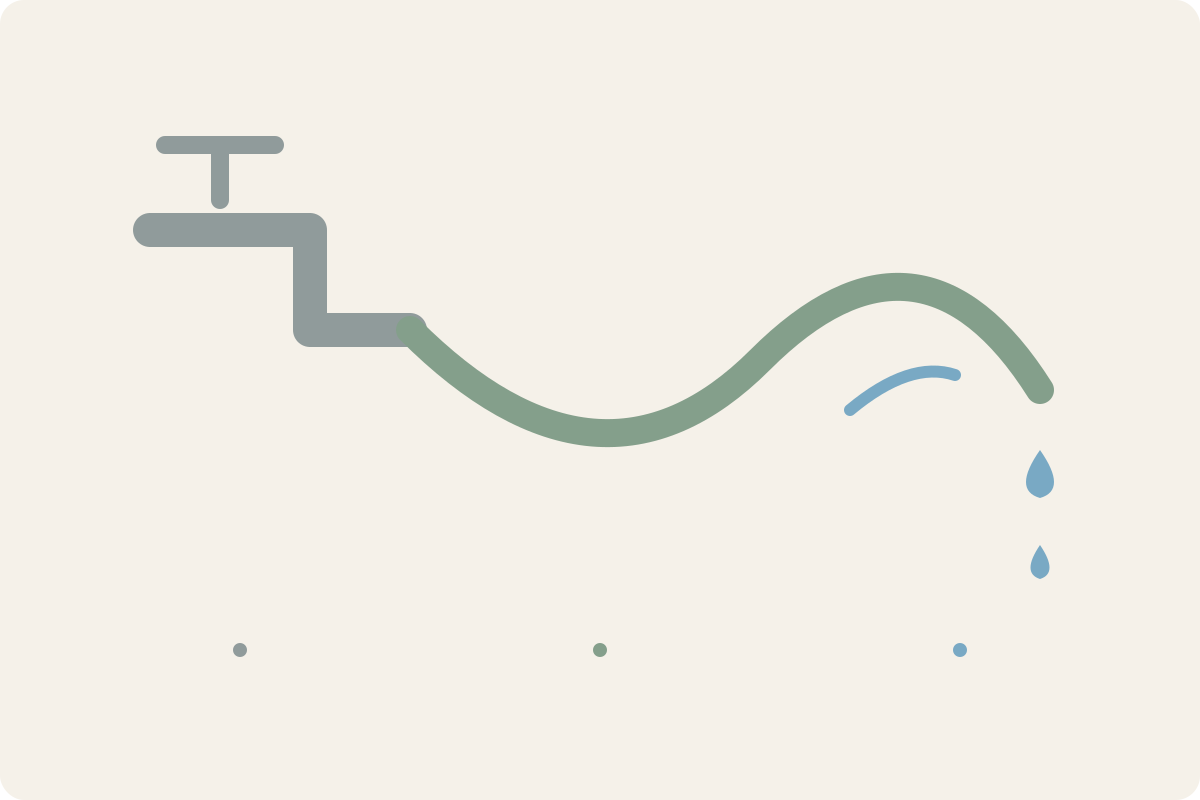
Imagine turning off a garden hose. Water can remain in the hose even though the tap has stopped supplying it. The urinary system is not literally a garden hose, but the comparison helps explain post-void dribbling: a little urine can remain in the urethra and escape after you think you have finished.
That pattern differs from leaking during coughing, from a sudden urge before you reach the toilet, and from a stream that dribbles while you are still urinating. The timing matters. Tell your clinician whether the drops appear at the end of the stream, immediately afterward or several minutes later.
Why ‘do more Kegels’ is an incomplete answer
The muscles around the urethra help with emptying and the final clearance of urine. Appropriate pelvic floor exercises may help some men, and NHS guidance describes them as one management option. But after-dribble is not a strength test: difficulty relaxing can also contribute, and other urinary problems can coexist.
A useful question is therefore ‘Do I need better contraction, better release, or an assessment of another cause?’ That is a much better starting point than increasing repetitions until something changes.
Understand tight versus weak pelvic floor patterns
Gloucestershire Hospitals NHS: After dribble ↗Michigan Medicine: Is dribbling after peeing normal? ↗Give the last part of the visit a little room
Avoid turning the last few seconds into a race. Finish without forcing or straining, allow a brief pause, and notice whether rushing or tensing seems to change the pattern. Do not squeeze your abdomen to push more urine out.
A clinician may teach techniques such as urethral milking or a well-timed pelvic floor action for appropriate cases. Ask for a demonstration rather than improvising forceful pressure. If you already have pain, reduced sensation or have recently had surgery, get personal advice before trying a technique.
Gloucestershire Hospitals NHS: After dribble ↗Write down the details that change the next step
For a few days, note whether it is a few drops or enough to wet clothing, how soon it happens, and whether there is urgency, burning, a weak stream or a feeling of incomplete emptying. The aim is a clear account, not constant checking.
New or persistent leakage deserves a medical conversation. Blood in the urine, painful urination, fever or a worsening weak stream should not be dismissed as a training problem. If you cannot urinate, seek urgent medical care.
Compare stress and urge leakage patterns
Michigan Medicine: Is dribbling after peeing normal? ↗Gloucestershire Hospitals NHS: After dribble ↗Where a trainer fits—and what it is there to do
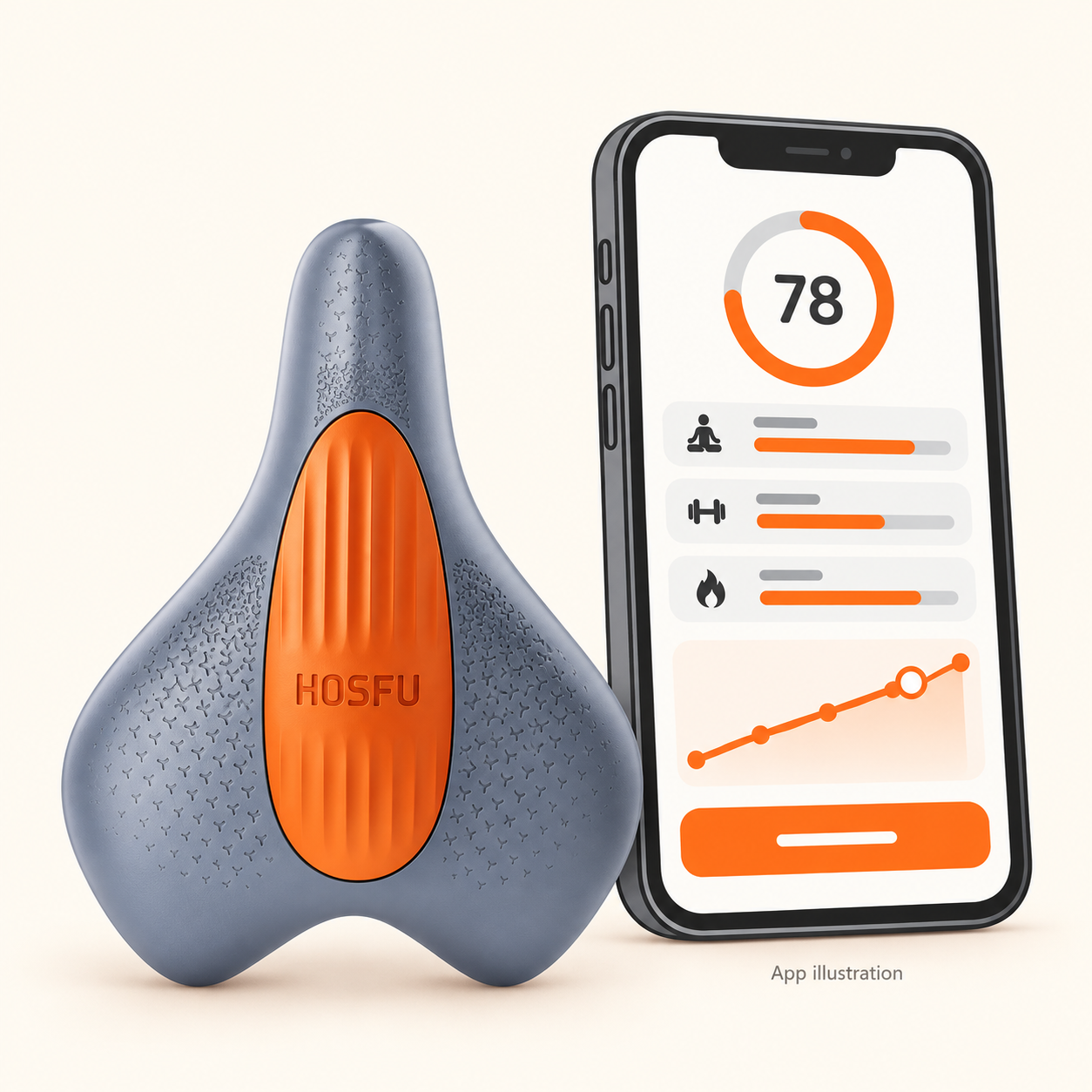
If active pelvic floor practice is part of your plan, HOSFU Gen 4 offers an external, fully clothed way to follow contractions and releases with app-connected pressure feedback. We recommend it for adults who want clearer rhythm and a routine they can repeat, rather than guessing whether every squeeze was useful.
Calibrate in the selected professional programme before training. Its pressure signal is movement feedback, not a test of bladder emptying. For a separate comfort break, quick mode provides three minutes of heat and vibration while you stay naturally relaxed; no active contraction is required.
That combination can support the practical side of an appropriate routine, but Gen 4 does not clear a blockage or identify the cause of dribbling. Follow the manual, use over clothing, and stop for discomfort. Understanding the pattern comes first; a device then has a specific job to do.