Look for a cluster, not a single clue
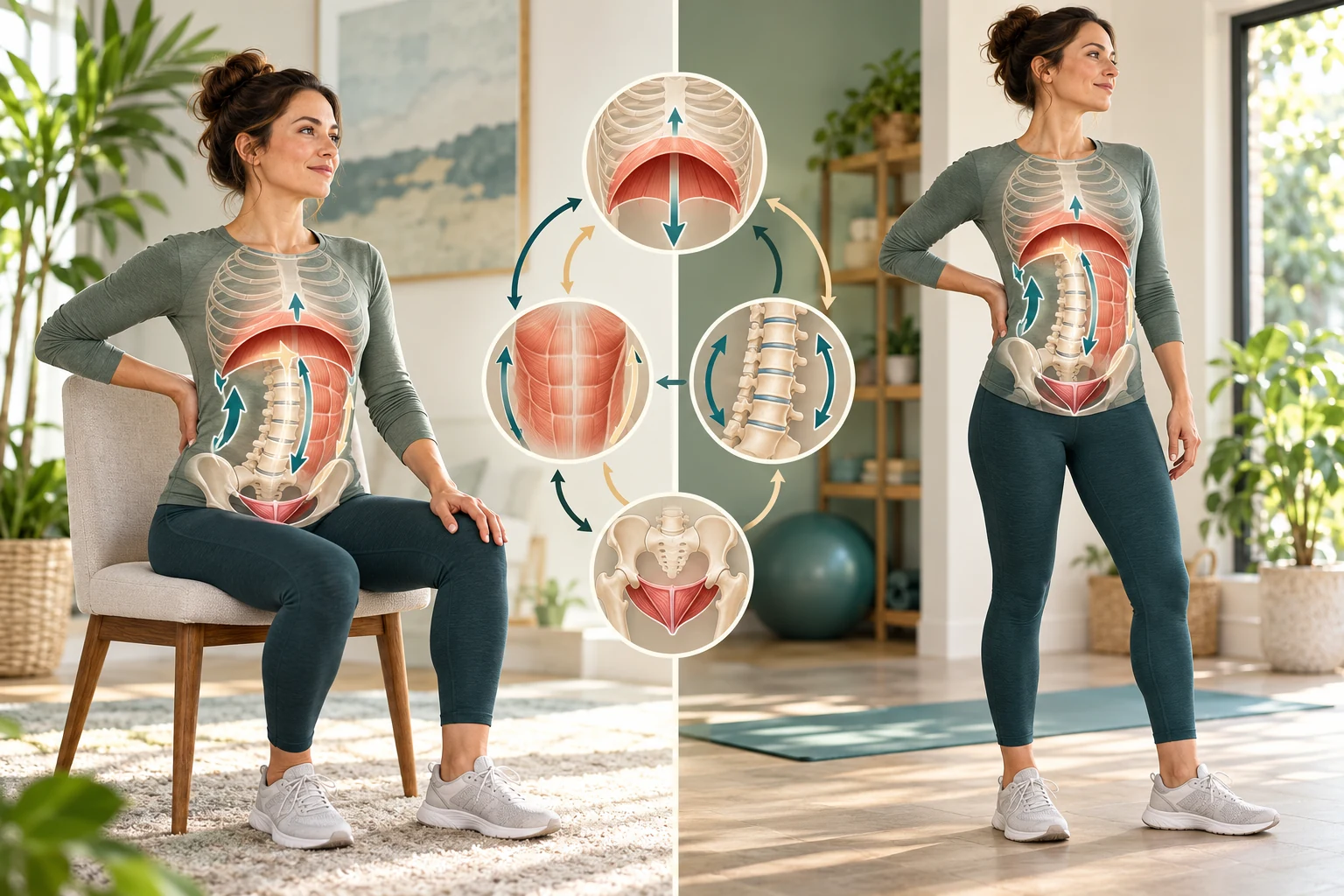
The pelvis and lower back do work as a team. The pelvic floor, diaphragm, abdominal wall, hips and spinal muscles all help manage movement and pressure. Research finds an association between low back pain and some pelvic floor or urinary symptoms, and pelvic floor training may help certain groups when added to broader physical therapy. That is not the same as saying every backache is caused by the pelvic floor.
Ask whether back pain travels with any of these patterns:
The cluster makes a pelvic health assessment more relevant. It still does not replace evaluation for the spine, hips, nerves or other causes.
- urine or bowel leakage
- urgency or difficulty emptying
- pelvic heaviness or a bulge sensation
- pain with sex or pelvic exams
- constipation and repeated straining
- symptoms that change with breathing, lifting or prolonged gripping
Run a 60-second coordination check
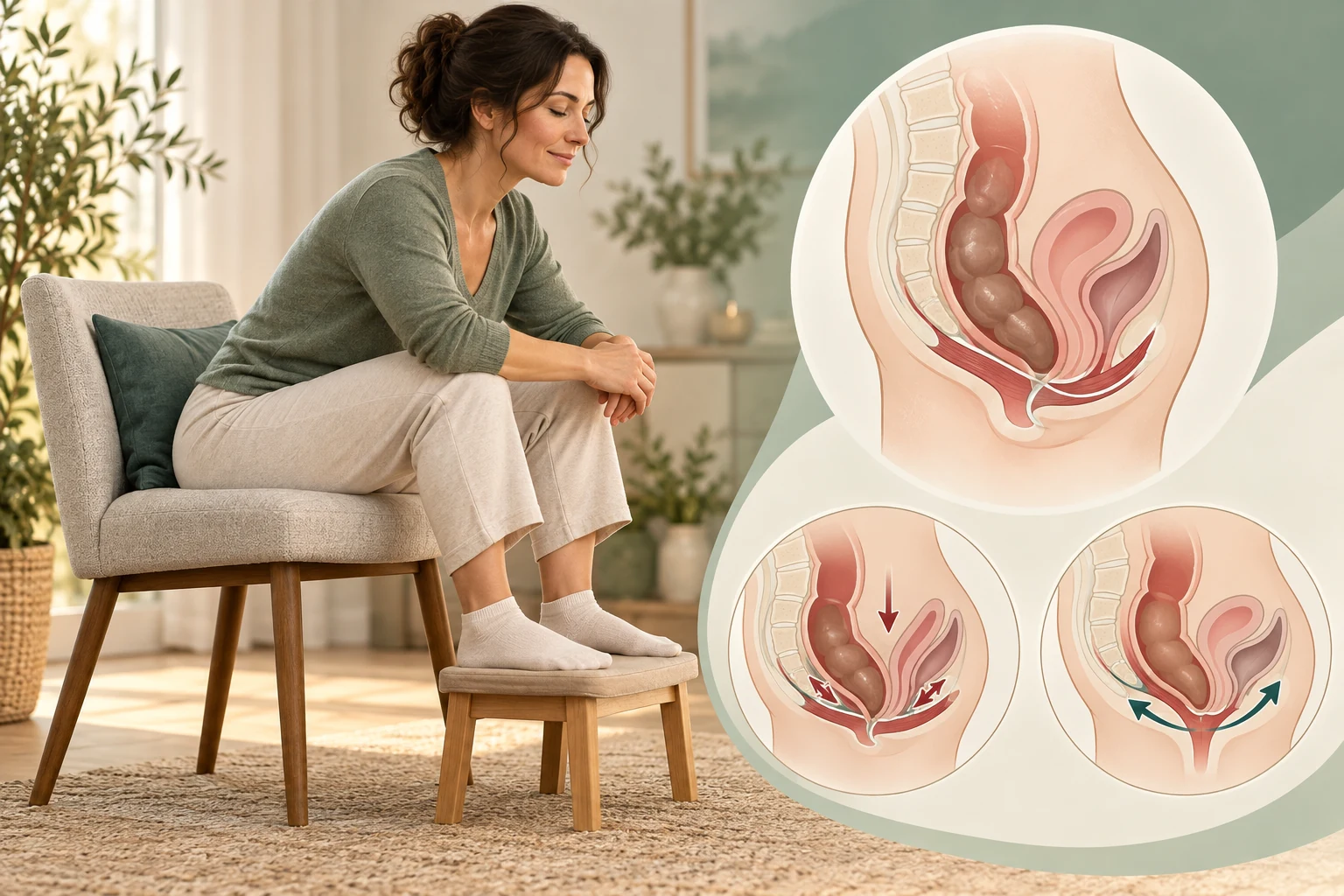
Sit supported with both feet on the floor. Inhale quietly into the lower ribs. Notice whether the abdomen and pelvic floor can soften. Exhale and make only a 20% pelvic floor lift while keeping the jaw, buttocks and thighs relaxed. Then release completely.
If a gentle lift reduces a sense of instability, strength and timing may deserve attention. If it increases back or pelvic pain, or you cannot let go afterward, harder Kegels are unlikely to be a good self-prescription. Think of an orchestra: turning up one instrument does not fix timing when the whole group is out of sync.
Build the plan around function
A physical therapist may combine pelvic floor work with hip strength, trunk endurance, mobility, breathing and gradual exposure to the task that hurts. The evidence for adding pelvic floor training to back-pain treatment is promising in some studies but remains low certainty, so the plan should be tested against your function rather than treated as a universal cure.
Seek urgent care for back pain with new loss of bladder or bowel control, numbness around the saddle area, major leg weakness, fever, significant trauma or unexplained weight loss. Those are not “try more Kegels” situations.
If an assessment finds that active pelvic floor training belongs in your broader plan, HOSFU Gen4 can provide fully clothed seated feedback. It does not diagnose back pain and should not be used to push through pain or neurological symptoms.