Start with a seven-day detective page
| Pattern | What it may help you discuss |
|---|---|
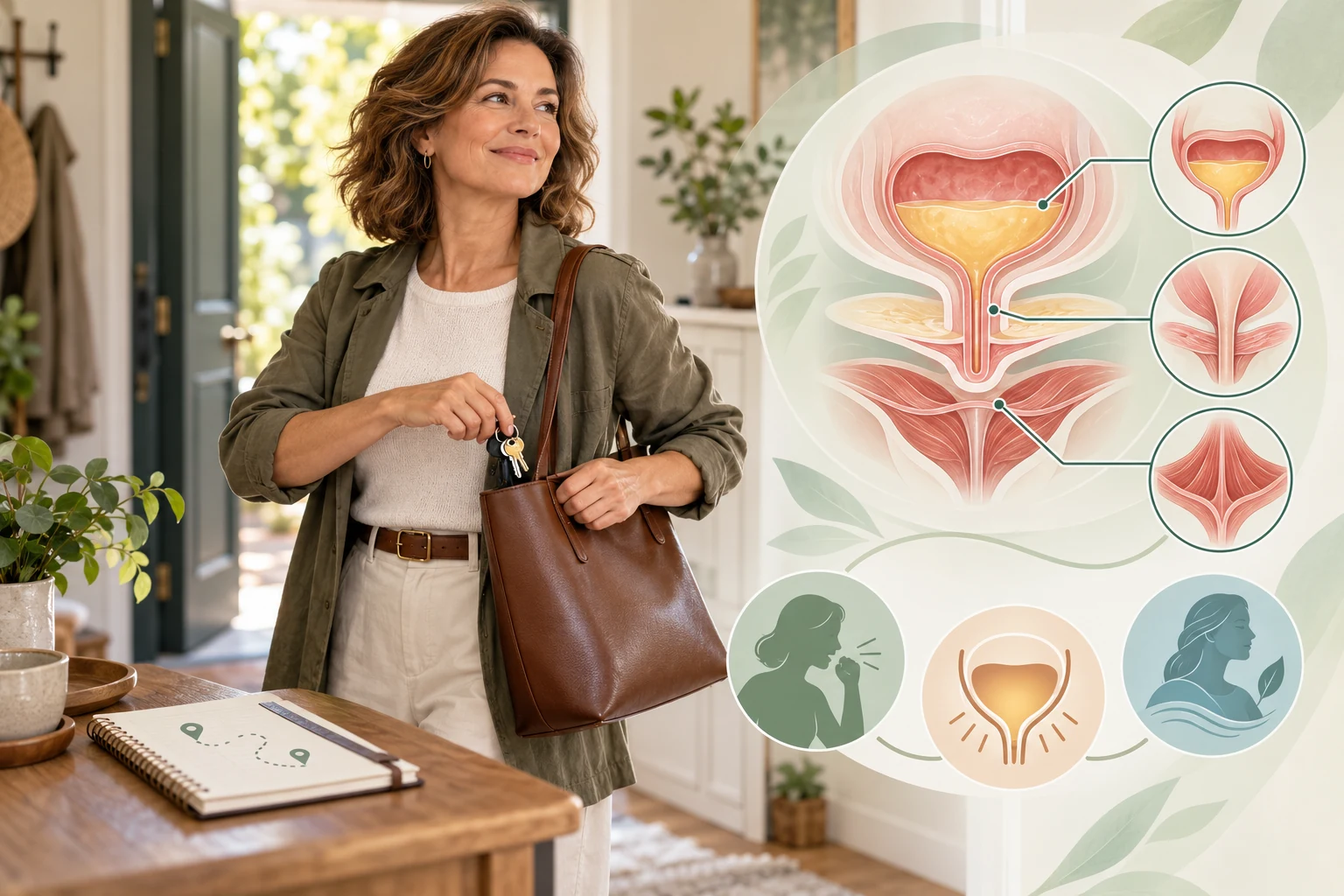
| Leak with cough, laugh or impact | Pressure support and pelvic floor timing |
| Sudden urge followed by leakage | Bladder training, irritants and urge strategies |
| Burning, pain or cloudy urine | Infection or another urinary condition |
| Dryness, irritation or painful sex plus urinary symptoms | Genitourinary syndrome of menopause and local tissue care |
| Weak stream or incomplete emptying | A bladder-emptying assessment before more exercises |
Menopause is a useful clue, but not a complete diagnosis. Lower estrogen can affect tissues around the vulva, vagina and urinary tract. Age, childbirth history, constipation, medications, bladder habits, infections and pelvic floor function may also contribute. The result can be stress leakage, urgency, both, or symptoms that only look similar.
Record time, drink, urge, toilet visit and leakage for a week. Add one short note about the trigger: cough, key in the door, exercise, waking at night or no obvious reason.
Kegels can help—but only after the question is clear
Pelvic floor muscle training can help urinary incontinence, especially when technique and progression match the symptom. But “do more Kegels” does not address every part of the picture. A muscle that is weak may need strength; a muscle that is guarded or painful may need release and coordination. Urgency often also benefits from bladder training and reducing specific triggers rather than restricting fluid indiscriminately.
If vaginal dryness, irritation, recurrent urinary infections or pain appeared around menopause, ask a clinician about genitourinary syndrome of menopause. ACOG notes that vaginal estrogen may help some people with urinary incontinence, but suitability depends on individual history and should be discussed with a qualified clinician.
What can you try this week?
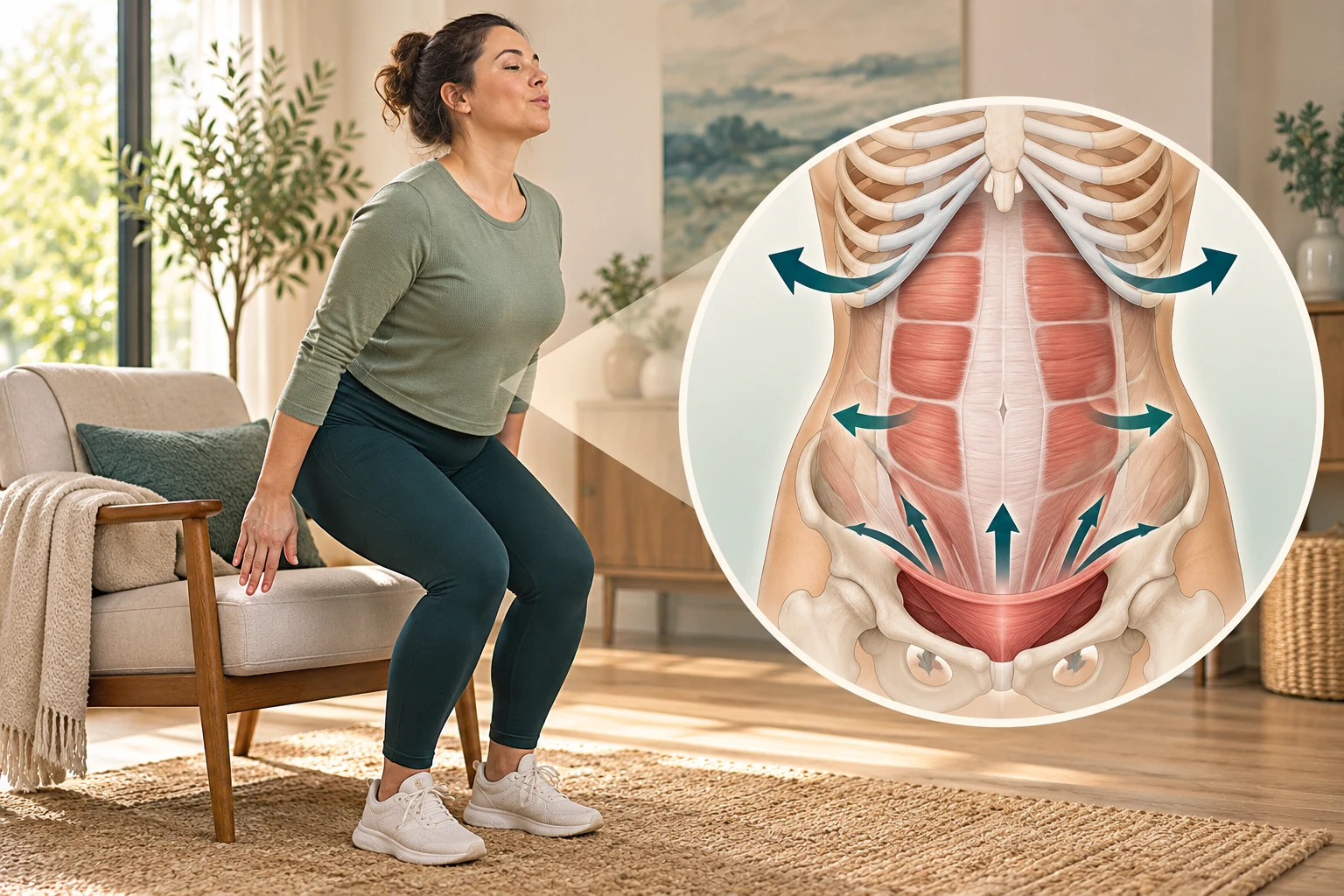
Keep normal hydration unless a clinician has told you otherwise. Change only one suspected bladder irritant at a time so the result is readable. Practice a small pelvic floor lift followed by a complete release, without holding your breath. Before a cough, exhale and gently lift rather than clenching all day.
See a clinician for any new or bothersome incontinence. Seek prompt care for blood in urine, fever, flank pain, inability to urinate or sudden severe pelvic symptoms.
If your assessment points toward active strengthening, HOSFU Gen4 offers fully clothed seated feedback to make practice less abstract. It cannot identify infection, tissue changes or the cause of urgency.