
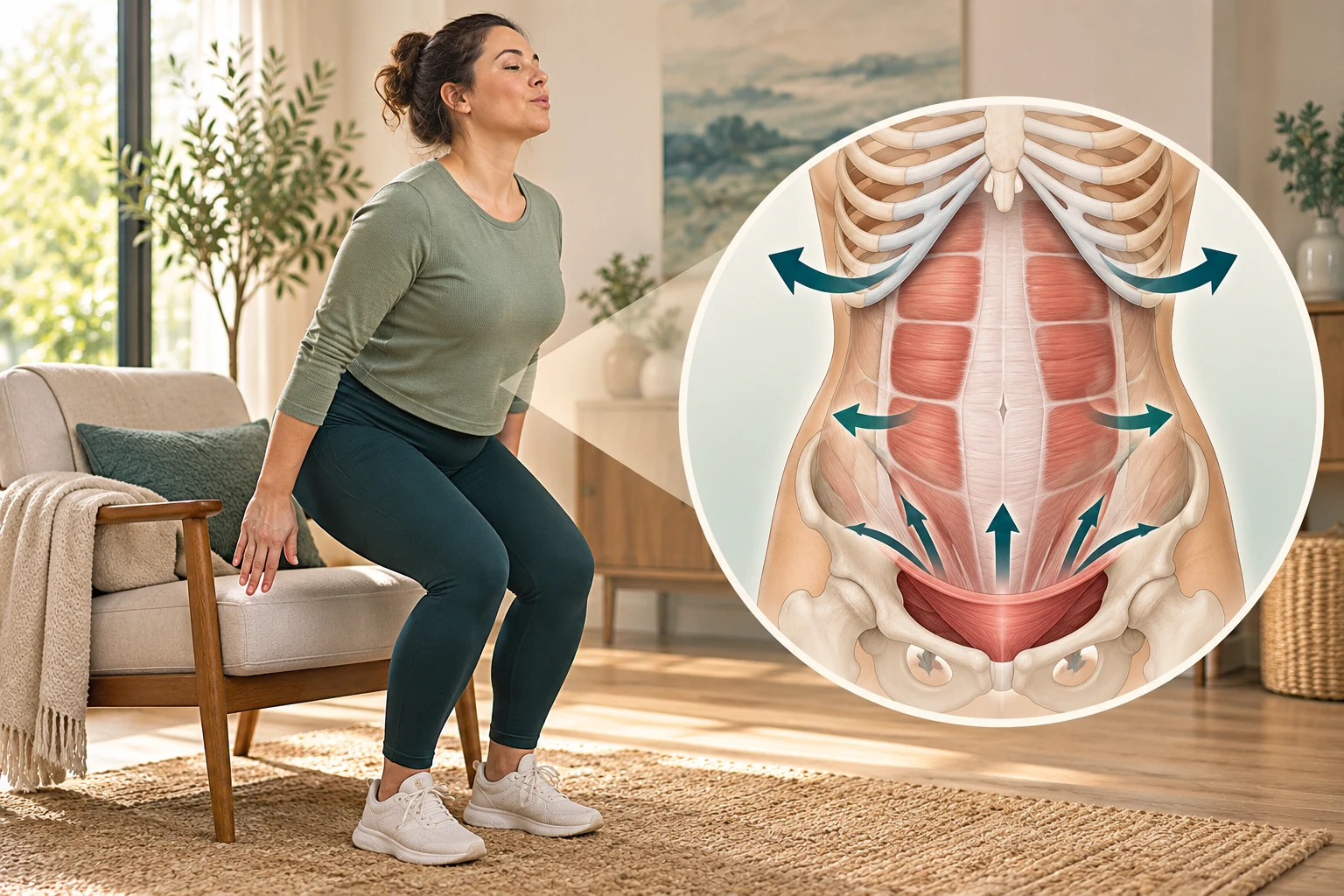
Watch the task, not only the gap
Diastasis recti is a widening along the connective tissue between the two sides of the rectus abdominis. The width is only one clue. How the tissue manages tension, how you breathe and what happens during a real task often matter more than winning a finger-width measurement.
Choose one ordinary movement—rolling out of bed, lifting the baby or standing from a chair. Notice four things:
1. Do you hold your breath? 2. Does the midline form a pronounced dome or ridge? 3. Do you leak or feel pelvic heaviness? 4. Can you make the movement easier by exhaling and reducing the load?
This is a pressure experiment, not a self-diagnosis. Imagine squeezing the middle of a tube of toothpaste with both ends closed: pressure must go somewhere. Your goal is not to brace every muscle as hard as possible; it is to give pressure a coordinated route.
Try a lower-pressure version
Lie with knees bent. Inhale into the lower ribs. As you exhale, gently narrow the lower abdomen as if fastening loose trousers, and add a light pelvic floor lift only if it is comfortable. Keep breathing. Relax everything before repeating.
Then transfer the same timing to a task: exhale during the hardest part of standing or lifting. Bring the load closer. Use your arms and legs. If the midline domes sharply or pelvic symptoms increase, reduce the range or weight.
When does physical therapy add value?
A pelvic health or postpartum physical therapist can assess the abdominal wall, pelvic floor, breathing, scar, posture and the task that actually causes trouble. Seek help when the separation remains obvious and bothersome after early postpartum recovery, or when you have pain, leakage, pelvic pressure, bowel difficulty, weakness that limits daily life, or uncertainty about returning to exercise.
Neither every abdominal gap nor every leak requires the same plan. Some people need progressive strength; others first need better breathing, less straining, scar work or permission to stop gripping all day.
If active pelvic floor practice belongs in that plan, HOSFU Gen4 can add fully clothed seated feedback. It cannot measure diastasis recti or replace an abdominal and pelvic floor assessment.