
Translate “tighter” into one honest sentence
The useful question is: which specific experience do you want to change? The answer changes the kind of help worth seeking.
Finish this: “When I ____, I feel ____; I want to be able to ____.” “I leak when I sneeze and want to stop worrying about my trousers” is not the same problem as “sex hurts and I want it to feel comfortable.” Take that sentence to a clinician. It is more useful than labelling your body “loose.”
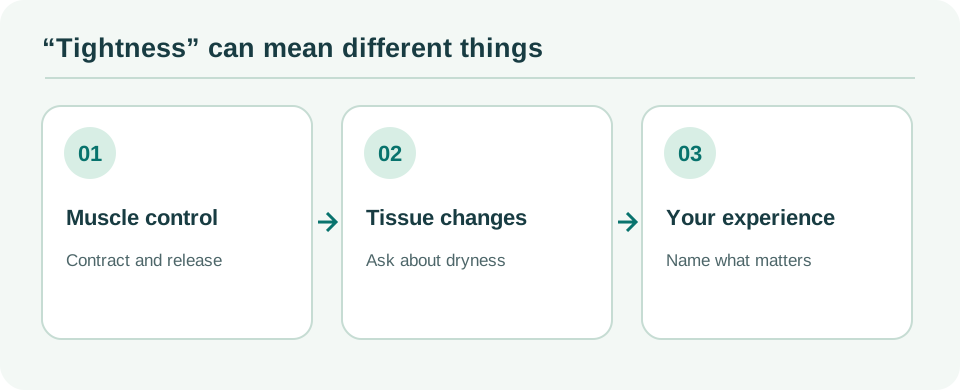
What a Kegel can practise
The pelvic floor is a group of muscles around the openings of the bladder, vagina, and bowel. A Kegel is a deliberate contraction followed by release. Practised appropriately, it can improve control of those muscles and may help some bladder symptoms. Think of learning to move a hand: a firmer grip is one possible skill, but an easier opening matters too. The diagram separates three questions that a single word—“tightness”—often bundles together.
That does not mean an app, weight, or chair can promise to narrow the vagina, restore a particular sexual sensation, or reverse changes in vaginal tissue. Cleveland Clinic notes that feelings of vaginal laxity can be related to childbirth, aging, or menopause and that pelvic floor physical therapy may help. It also says treatment is not always necessary. A change in sensation is a reason to ask what matters to you, not proof that your body is defective.
Start with the symptom, not a body-shaming label
| What you notice | Better question to bring to care |
|---|---|
| Leakage with a cough or jump | Is this stress leakage, and would supervised muscle training help? |
| Pain or trouble letting go | Could tension or another cause need assessment before strengthening? |
| Dryness or irritation | Could tissue changes need a different discussion? |
| A new bulge or heaviness | Should I be assessed for support or prolapse symptoms? |
| Less sensation, without other symptoms | What changed, and what kind of support would I actually value? |
If the issue is leaking when you cough, tell a clinician about the leak. If intercourse is painful, dryness, tissue changes, or muscle guarding may need attention; “more Kegels” could be the wrong reflex. If a bulge, pressure, or a feeling of something falling out is present, mention it rather than testing yourself with progressively stronger squeezes. If sexual sensation changed, describe when and how without assuming one muscle explains everything.
The release is part of the exercise
If training is appropriate, practise a gentle lift and a full return to rest while breathing normally. Clenched buttocks, held breath, or downward pressure are not extra credit. If you cannot tell whether you have contracted or released, individual guidance can help. Cleveland Clinic also cautions that doing Kegels when you do not need them or doing too many can leave muscles too tense.
Try not to turn intimacy into a weekly strength exam. Improvements in comfort and control are more useful to track than a claim that a body part has become “as tight as before.” A partner's comment, an advertisement, or a device score cannot diagnose pelvic floor function.
Where a home trainer fits—and where it does not
Some people want a private, repeatable way to practise a contraction their clinician has recommended. Feedback can make a routine easier to follow, but a pressure signal is influenced by position and contact; it does not measure vaginal tissue or prove sexual outcomes. If your main problem is pain, dryness, or a bulge, start with appropriate care instead of a gadget promising “tightening.”
If active seated practice is suitable for you, HOSFU Gen4 offers fully clothed pressure feedback for contracting and releasing. It is a practice aid, not a vaginal-tightening treatment or a substitute for a pelvic health assessment.