
A life stage can be relevant without explaining everything
Hormonal changes around menopause can affect vaginal and urinary tissues as well as pelvic support. Some people notice dryness, irritation, urgency or repeated urinary infections alongside leakage. But constipation, medicines, infection and other factors can also contribute. A new symptom deserves its own description, even if the timing seems obvious.
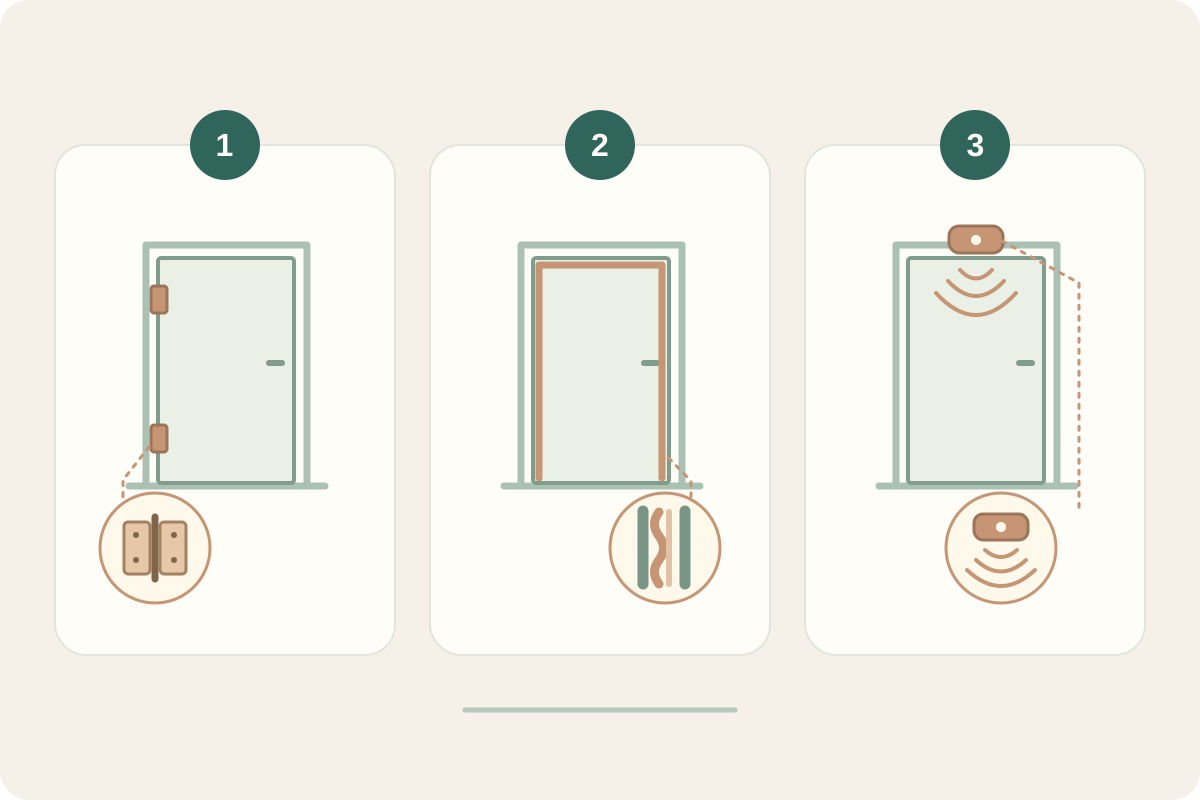
Imagine a doorway with a hinge, a seal and a sensor. Tightening the hinge will not necessarily repair the seal or reset the sensor. In the same way, muscle training, care for tissue symptoms and bladder-habit work address different parts of the picture. The comparison is a way to organize questions, not to diagnose yourself.
What should you tell your clinician?
| Your observation | A useful question |
|---|---|
| Leaks with a cough, lift or exercise | Would an assessed pelvic floor programme help this pattern? |
| Sudden urgency or frequent bathroom trips | Do I need bladder training or a check for another cause? |
| Dryness, irritation or discomfort with sex | Could menopause-related tissue changes be involved? |
| Burning, blood in urine or difficulty emptying | What needs prompt investigation rather than exercise? |
Bring a short account of what changed and when. Everyday language is enough. You do not need to decide which treatment you want before you are allowed to ask for help.
Why waiting and squeezing may both miss the point
There is no reliable promise that menopause-related leakage will disappear on its own. Some bladder problems improve when a contributing cause is addressed; others need ongoing management. Waiting for a milestone birthday or the last hot flash is not a treatment plan.
Pelvic floor muscle training may help when the pattern calls for it. Urgency can also require bladder training and other care. If dryness or irritation is part of the problem, ask about local treatments and whether vaginal estrogen is appropriate for your medical history. Hormonal treatments are not interchangeable, and starting or changing one needs an individual conversation.
You can ask a simple follow-up: ‘Which symptom is this part of the plan meant to improve?’ That question makes it easier to understand why two treatments might be suggested—and why buying another strengthening tool may not solve tissue discomfort.
Measure life getting easier, not a perfect streak
Choose a meaningful observation: fewer interruptions on a walk, less urgency during a meeting, or less discomfort. Keep a short record, note which changes you actually made and agree a review point with your clinician. This is more useful than giving yourself a pass or fail every time you visit the bathroom.
Keep drinking normally unless you have been given a specific fluid plan; do not drastically cut fluids to hide the problem. Seek advice for persistent symptoms and prompt care for blood, burning or difficulty passing urine. Complete inability to urinate needs urgent help. Support is available—you do not have to treat leaking as the price of getting older.
Make the exercise part easier to keep
If active pelvic floor training belongs in your plan, consider HOSFU Gen 4 for an external, fully clothed routine with app-guided pressure feedback. It gives the practice a clear place in your day. Its separate three-minute warmth-and-vibration mode offers a comfort pause; it does not replace care for hormonal or tissue symptoms.
Sources for this article
- NHS: Menopause and perimenopause symptoms ↗
- NHS Mid and South Essex: Pelvic health ↗
- NIDDK: Symptoms and causes of bladder control problems ↗
- NHS: Non-surgical treatment for urinary incontinence ↗
- NHS: About vaginal oestrogen ↗
- Cochrane: Oestrogens for urinary incontinence in women ↗
- NHS: Tips to stop leaks ↗