Start with three ordinary days
A bladder diary for overactive bladder symptoms records drinks, bathroom visits, urgency and leaks. It can help even before you have a diagnosis. Three days is a practical starting point; follow your clinic's instructions if it requests a different period or its own form. Include the nights, rather than stopping the record when dinner is over.
Choose days you can actually record. If one is an office day and another is spent at home, label them. Do not postpone for weeks while waiting for three perfect days. Keep the page somewhere convenient, with a pen or a simple phone note nearby. The best format is the one you will remember to use at the moment something happens.
Make each entry small enough to finish
| Time | Drink | Urine passed | Urge / leak / context |
|---|---|---|---|
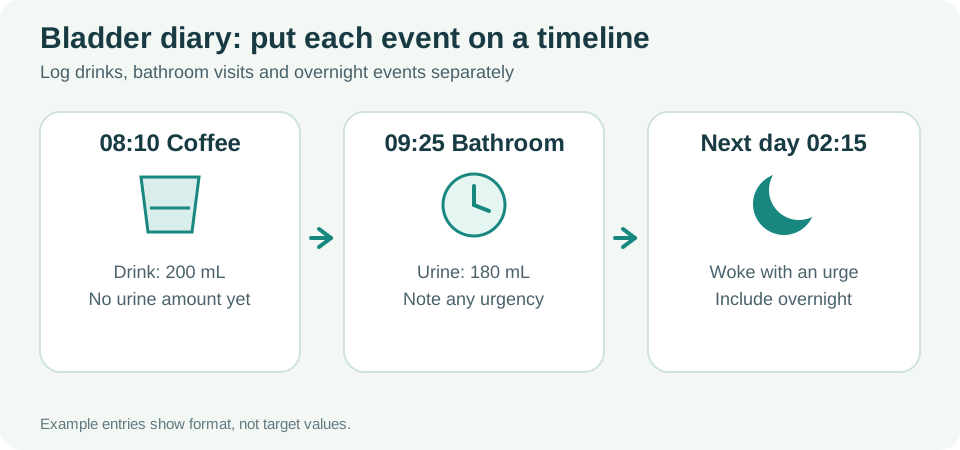
| 08:10 | Coffee, 200 mL | — | Breakfast |
| 09:25 | — | 180 mL | Sudden urge; no leak; at desk |
| 11:40 | — | Not measured | Small leak before reaching toilet; arriving home |
| 02:15 next date | — | 220 mL | Woke with urge; no leak |
Write the time, drink type and amount, or the time and amount of urine passed. Add whether there was an urgent need, a leak, and what you were doing. Use words such as ‘ordinary urge’ or ‘sudden, hard to postpone’; if your clinic gives you a numbered sensation scale, use that instead. Record pad changes if relevant.
If measuring urine is part of your clinic's instructions, use a suitable marked collection container and record the unit. Millilitres are convenient; do not mix unlabelled millilitres, fluid ounces and cups. Keep the container separate from food use. For drinks, noting your usual mug's volume once saves repeated guesswork. If measuring is impractical, write ‘not measured’ rather than inventing a figure.
The entries below are invented examples of recording, not patient results or targets. A drink and a bathroom visit do not have to share a row. Put separate events on separate lines so you can still read the sequence later.
Copy this blank structure for all three days
| Day / date | Time | Drink type + amount | Urine amount | Urge / leak / pad change | Activity / notes |
|---|---|---|---|---|---|
| Day 1: ______ | ______ | ______ | ______ | ______ | ______ |
| Day 2: ______ | ______ | ______ | ______ | ______ | ______ |
| Day 3: ______ | ______ | ______ | ______ | ______ | ______ |
Use one event line as often as needed; the three lines below are day labels, not a limit of one entry per day. Add your usual bedtime and final morning waking time to each day's notes. If your clinic has a rule about where a recording day begins and ends, follow it. Otherwise, include the calendar date with overnight entries to prevent double-counting.
Keep missing information visible. ‘Out of the house, volume not measured’ tells the reader something useful. A blank space is harder to interpret: did nothing happen, or did you forget? You can note a gap and continue. A diary with an honest gap is still worth bringing.
Give the night its own place
Record nighttime bathroom visits just as you record daytime ones, including amounts when requested. Note when you went to bed, when you finally got up, and whether you remember waking because you needed to urinate or were already awake for another reason. You do not have to solve the reason; a short description is enough.
For example, ‘01:30, awake because of noise, then used bathroom’ carries different context from ‘01:30, woke with urgent need’. These are recording examples, not a way to diagnose yourself. Keep the notebook accessible, but do not set an alarm simply to generate a measurement. Include the first morning visit and let your clinician decide how to interpret the overnight pattern.
Keep your usual routine while you record
It is tempting to drink less, skip your usual coffee or make extra ‘just in case’ visits so the page looks tidier. During a baseline diary, record your ordinary routine unless your clinician has already asked you to change it. Continue any prescribed fluid plan. Do not stop medicines or deliberately hold urine for longer to make the intervals look better.
If you do change something, write down what and when. A diary taken before a planned change and one taken afterward answer a different question from a baseline record. Keeping that distinction visible makes the information useful. The goal is not the smallest number of bathroom trips; it is understanding what is happening.
Bring the pattern—and one question you care about
Bring the whole diary, your medicine list, and a short note about when symptoms began. Your clinician can compare timing, amounts, urgency and leak situations, then decide what assessment or plan fits. A diary does not by itself establish overactive bladder or measure pelvic floor strength. Symptoms that look similar on paper can have different explanations.
Choose one practical question: ‘Why are meetings harder than mornings at home?’ or ‘What should we try first for the trips that interrupt my sleep?’ You do not need to calculate a bladder score. Also do not wait to complete three days if you have blood in your urine, painful urination or difficulty emptying. Seek prompt advice; complete inability to urinate needs urgent care.
Keep exercise records and symptom records doing different jobs
If active pelvic floor training fits your care plan, HOSFU Gen 4 offers fully clothed practice with app-connected pressure feedback. It can give your exercise routine a clearer rhythm while your bladder diary captures everyday symptoms. They answer different questions: a training graph is not a urine-volume measurement or proof that urgency has improved. Consider Gen 4 for the practice support you want, without expecting a guaranteed overactive-bladder treatment.