Passing stool requires both support and release
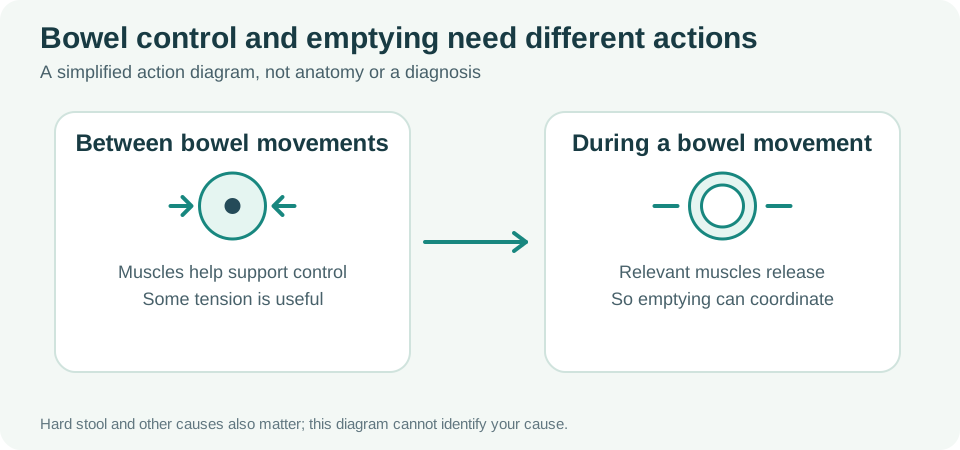
Pelvic floor muscles help you maintain bowel control. When you have a bowel movement, the muscles around the outlet also need to release at the right time. In a coordination problem, they may not relax enough—or may tighten instead. Pushing harder against a tightened outlet can make emptying feel more difficult. This describes one possible problem; it does not explain every case of constipation.
This is one reason a generic Kegel routine is not a universal constipation exercise. Repeatedly practicing a squeeze is a different task from learning to release during emptying. If you already struggle to relax, adding harder contractions without assessment may reinforce the wrong focus. That does not prove that Kegels caused your constipation, or mean everyone with constipation has a tight pelvic floor.
Describe the difficulty before choosing the exercise
| What you notice | What to describe |
|---|---|
| Dry or lumpy stool | Consistency, frequency and recent routine changes |
| Stool feels ready but passage is difficult | Straining, a blocked sensation and whether stool is soft |
| You keep returning without feeling finished | What comes out and how long the pattern has lasted |
| Symptoms began after a new medicine | The medicine, dose and start date; do not stop it yourself |
Constipation can mean hard stool, difficult passage, infrequent bowel movements or a persistent sense that you have not finished. Those experiences overlap, but they are not interchangeable. A useful first question is: ‘Is the stool hard to pass because it is hard, or does passing it feel difficult even when it is soft?’ The answer is a clue for discussion, not a home diagnostic test.
Use the examples below to find language for your appointment. More than one row may fit. None assigns you a diagnosis or selects a treatment on its own.
Check the ordinary obstacles, too
The pelvic floor is only one part of the story. Low fibre intake, inadequate fluids, reduced activity and repeatedly ignoring the urge can contribute. Medicines and supplements, including some pain medicines and iron, can also matter. Bowel conditions and slow transit are other possibilities. A muscular explanation should not erase the rest of your history.
Try a brief routine audit: what changed around the time this began? An early shift may have removed your unhurried breakfast. Travel may have changed meals and access to a toilet. These are illustrative situations, not patient stories. Write down the relevant change rather than deciding that your body has suddenly forgotten how to work. If a medicine seems involved, bring the question to its prescriber or pharmacist.
Make the bathroom less of a strength contest
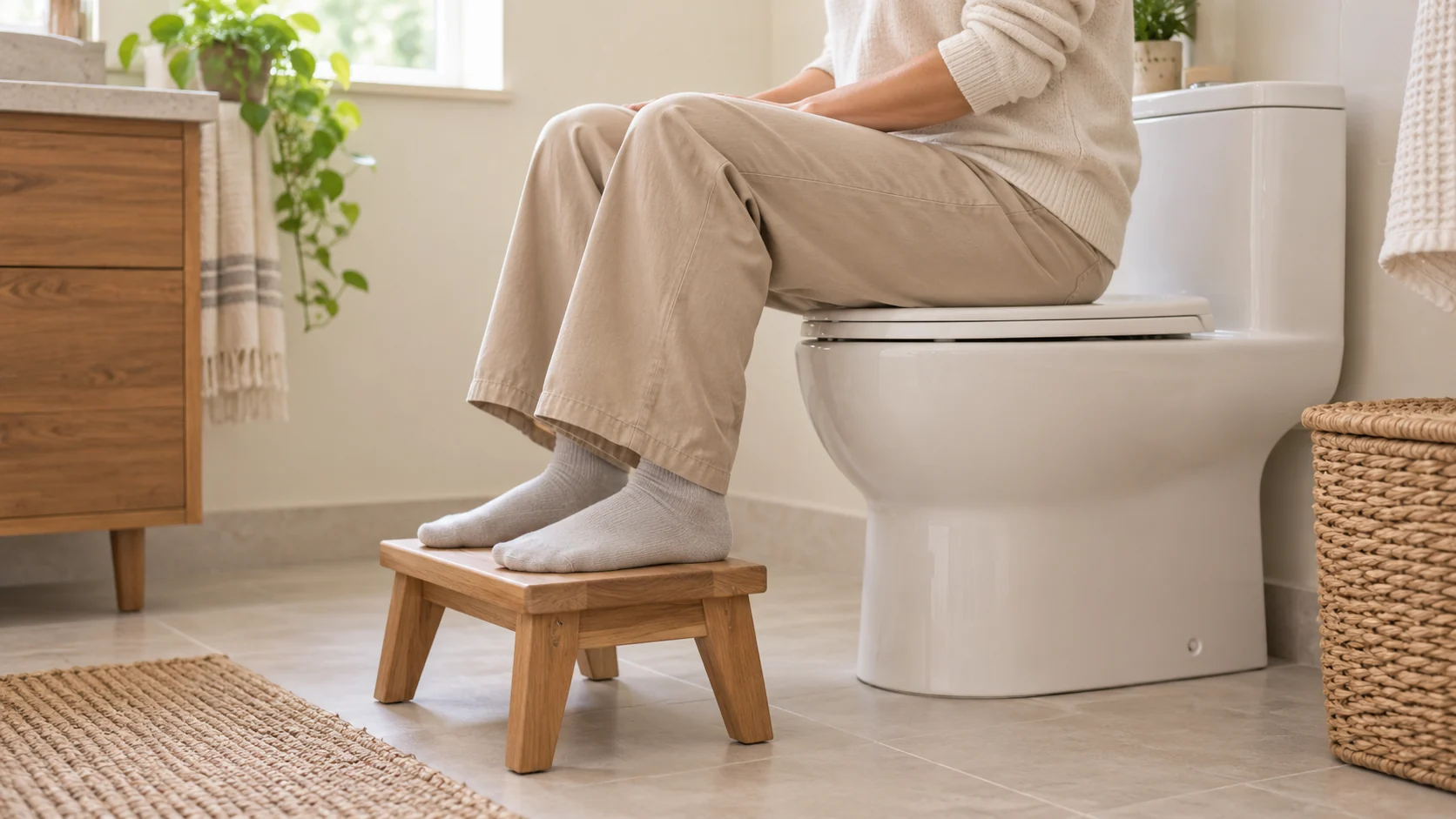
Give yourself an unhurried opportunity to go and respond to the urge when practical. A stable, low footstool that lets your knees sit above your hips may make passing stool easier. Choose a setup you can use safely and comfortably; a precarious stack of books is not an improvement. A footstool is an option, not a guarantee or a test for pelvic floor dysfunction.
If nothing is happening, escalating into a prolonged session of forceful pushing is not the goal. Let the attempt be an attempt, rather than a performance you must finish. For an ongoing problem, ask for advice about a workable bowel routine. A clinician may suggest timing around meals, alongside appropriate food, fluid and activity changes. If you already have a prescribed fluid or dietary plan, work within it.
Notice the difference between making room in your day and forcing a result. The first is something you can organise: privacy, a convenient time, comfortable support. The second is not something to win by determination. This distinction can make the next appointment more useful, because you can describe what happens even when the setup is reasonable.
What does coordination training actually mean?
When assessment identifies a problem with the muscles controlling bowel movements, treatment may include specialist biofeedback. The purpose is to relearn how those muscles work during emptying. It is not simply a competition for the strongest contraction. A clinician or pelvic health professional can decide which assessment and training are appropriate; not every person needs the same tests or exercises.
Bring a short record of stool consistency, straining, incomplete emptying, pain and any medicines or remedies you use. Say if you need to assist emptying with your hand; that information belongs in the consultation, even if it feels awkward. A useful question is: ‘Do my symptoms suggest an outlet coordination problem, and how would you check?’ You should leave understanding the purpose of any proposed exercise, not merely its repetition count.
Know when the next step is medical advice
Arrange a medical review when constipation persists despite self-care, keeps recurring or represents an unexplained change for you. Seek medical care promptly for blood in the stool, rectal bleeding, persistent abdominal pain, vomiting, inability to pass gas or unexplained weight loss. Severe pain with vomiting or inability to pass gas calls for urgent assessment. Do not wait for a new exercise routine to work.
You do not need to arrive with a theory. ‘This is new, this is how it feels, and this is what I have tried’ is a useful starting point. The aim is an easier, more comfortable bowel movement—not a more impressive squeeze.
Choose a training tool for the job it actually does
If active pelvic floor practice is separately appropriate for you, HOSFU Gen 4 offers fully clothed training with app-connected pressure feedback. That can make a suitable daily routine easier to follow. It is not a constipation treatment or a substitute for clinical anorectal biofeedback. Consider Gen 4 when you want support for an agreed exercise routine; first clarify whether your current bowel symptoms call for relaxation, coordination or another approach.