Lying down: a quieter place to learn
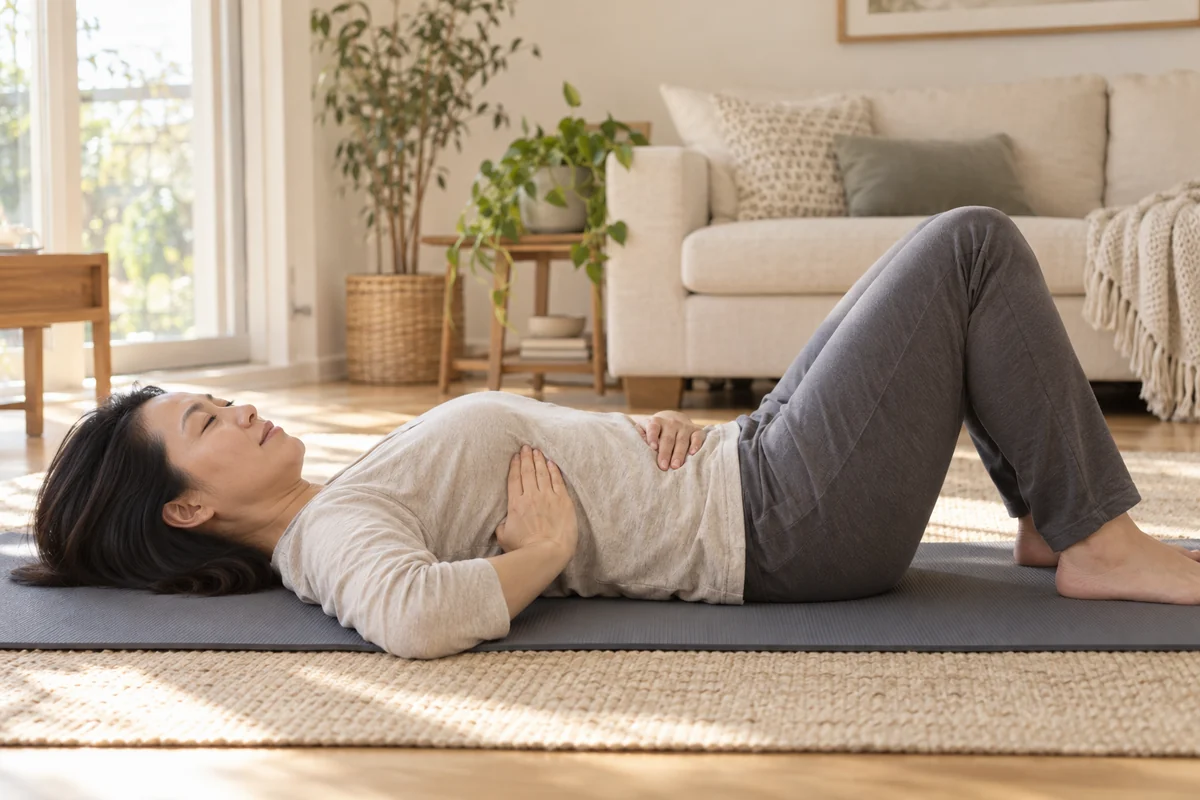
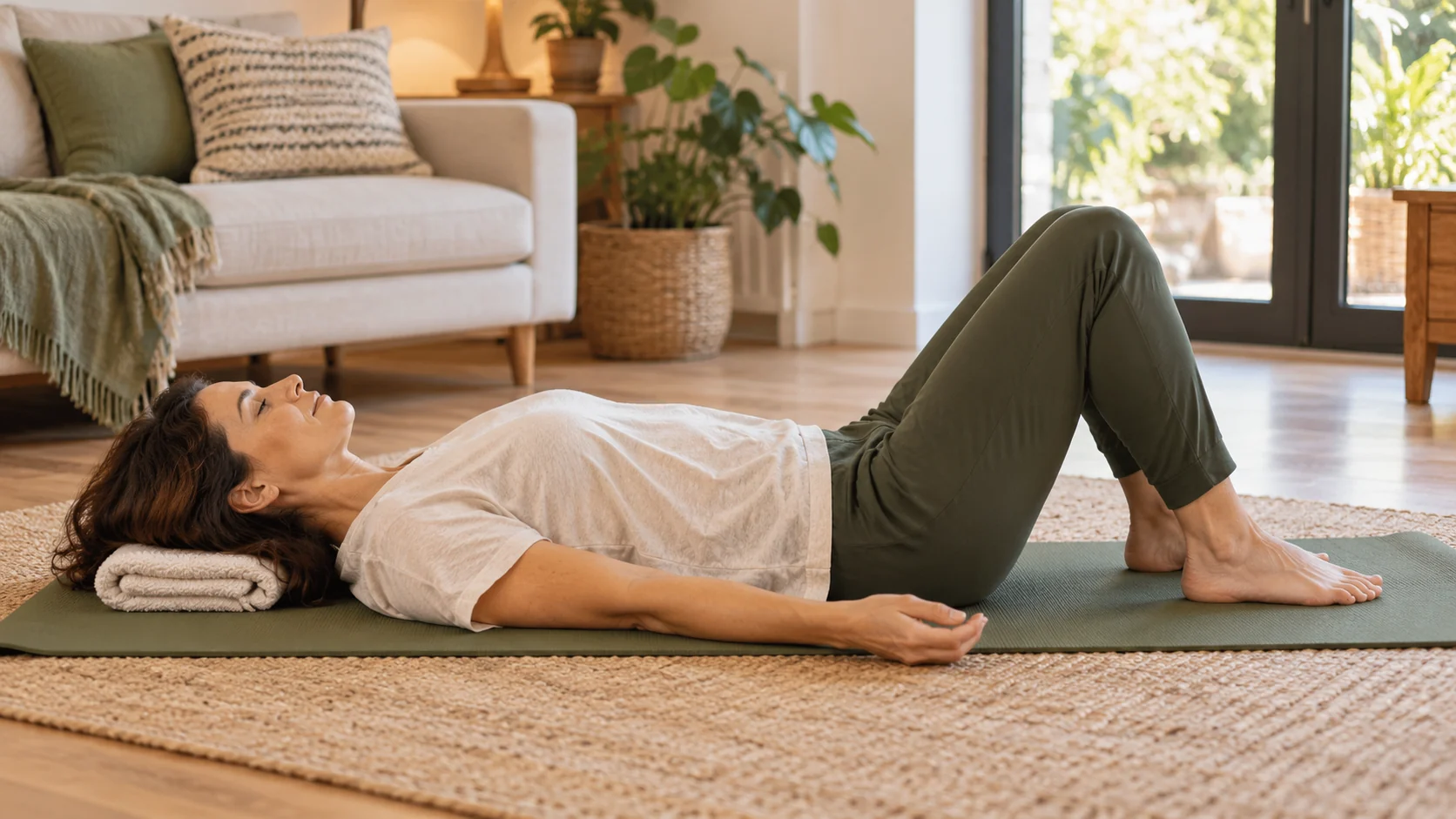
Lie on your back with your knees bent and your feet resting on the floor or bed. Let your belly, buttocks, and jaw soften. Imagine gently lifting the muscles you would use to stop passing gas; then let them return to rest. The release deserves as much attention as the lift. If you mostly feel your glutes clench or find yourself holding your breath, reset and try a smaller effort. You are learning a precise signal, not trying to win a strength test.
This position is useful when you are uncertain what a contraction feels like or when standing makes you brace your whole body. It is not mandatory. If lying down is uncomfortable, choose another supported position and seek individual guidance if symptoms persist.
Sitting: bring the skill into ordinary life
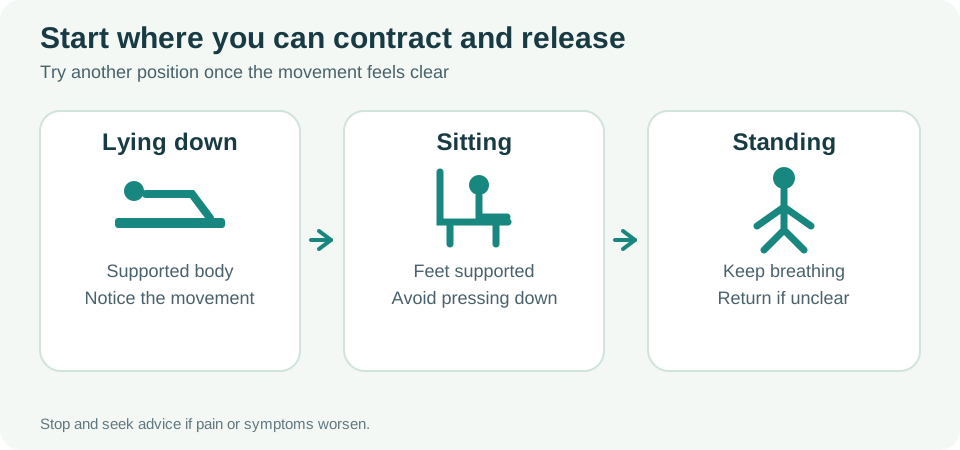
Sit on a stable chair with your feet supported and your weight balanced over your sitting bones. Keep your shoulders easy. Try a gentle contraction without pressing down into the seat, curling your toes, or squeezing your thighs together. Then release fully. A chair makes short practice sessions easy to fit into a day, but it also adds a trap: leaning hard into the seat can feel like “more effort” even though it may simply change pressure under you.
If you use a pressure feedback device, leaning forward or pressing down into the seat can change its reading. Keep your posture steady and compare attempts under similar conditions. A number or curve alone cannot certify technique.
Standing: useful once you can recognize the movement
| If this happens | Try this next |
|---|---|
| You cannot identify a gentle lift | Start supported, reduce effort, and ask a pelvic health professional for help if it stays unclear. |
| You can lift but not let go | Shorten the effort, leave a real pause, and avoid adding more repetitions. |
| The chair reading rises when you lean | Reset your seat and posture; do not count leaning as proof of a contraction. |
| Pain or worsening urgency appears | Stop the exercise and seek individual assessment instead of pushing through. |
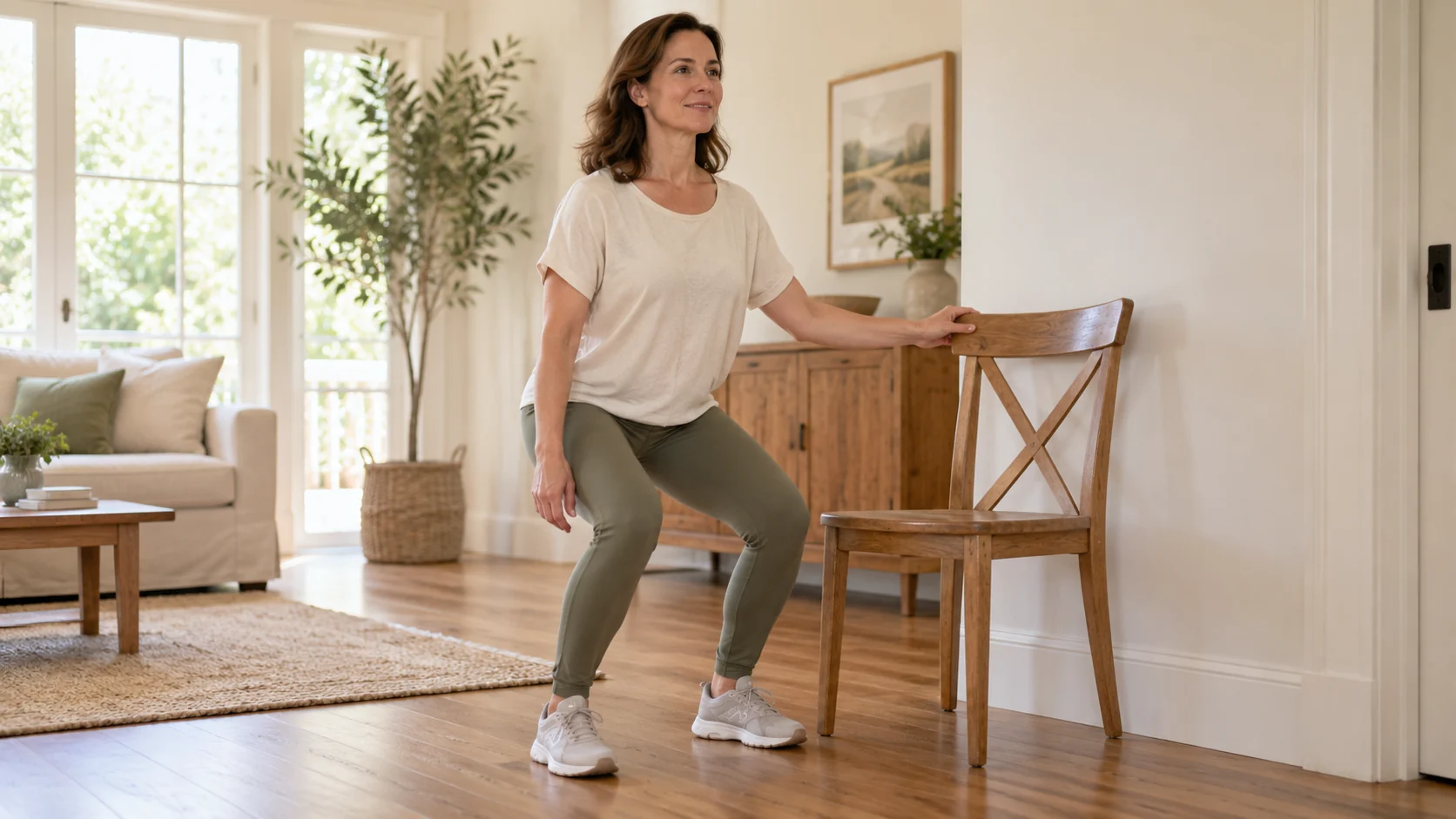
Stand with your feet comfortably apart and knees unlocked. Breathe normally. Try the same small lift and complete release without gripping your buttocks or holding your abdomen rigid. Standing can be a practical way to connect the skill with a cough, a lift, or a moment of urgency, but it can also make it harder to tell whether you are contracting or simply bracing. If the signal disappears, return to the position where you can identify it. Moving back is a useful adjustment, not a failure.
How often should you change positions?
There is no need to rotate through all three in every session. Find one position in which you can feel an easy contraction and a complete release. Once that feels repeatable, try a few attempts in another position and notice what changes. Quality matters more than collecting postures. If you have recent pelvic or prostate surgery, troublesome symptoms, pregnancy, or difficulty emptying your bladder, ask a clinician for advice suited to you.
Where HOSFU Gen4 fits
If sitting is a comfortable place for your active practice, HOSFU Gen4 gives pressure feedback while you deliberately contract and release, fully clothed. It is a seated tool; it does not measure what happens when you lie down or stand, and pressure changes are not a diagnosis of technique. Its separate quick mode is for heat and vibration comfort, not a recorded Kegel set. Explore Gen4 if a guided seated routine suits you.