Put five clues on one page
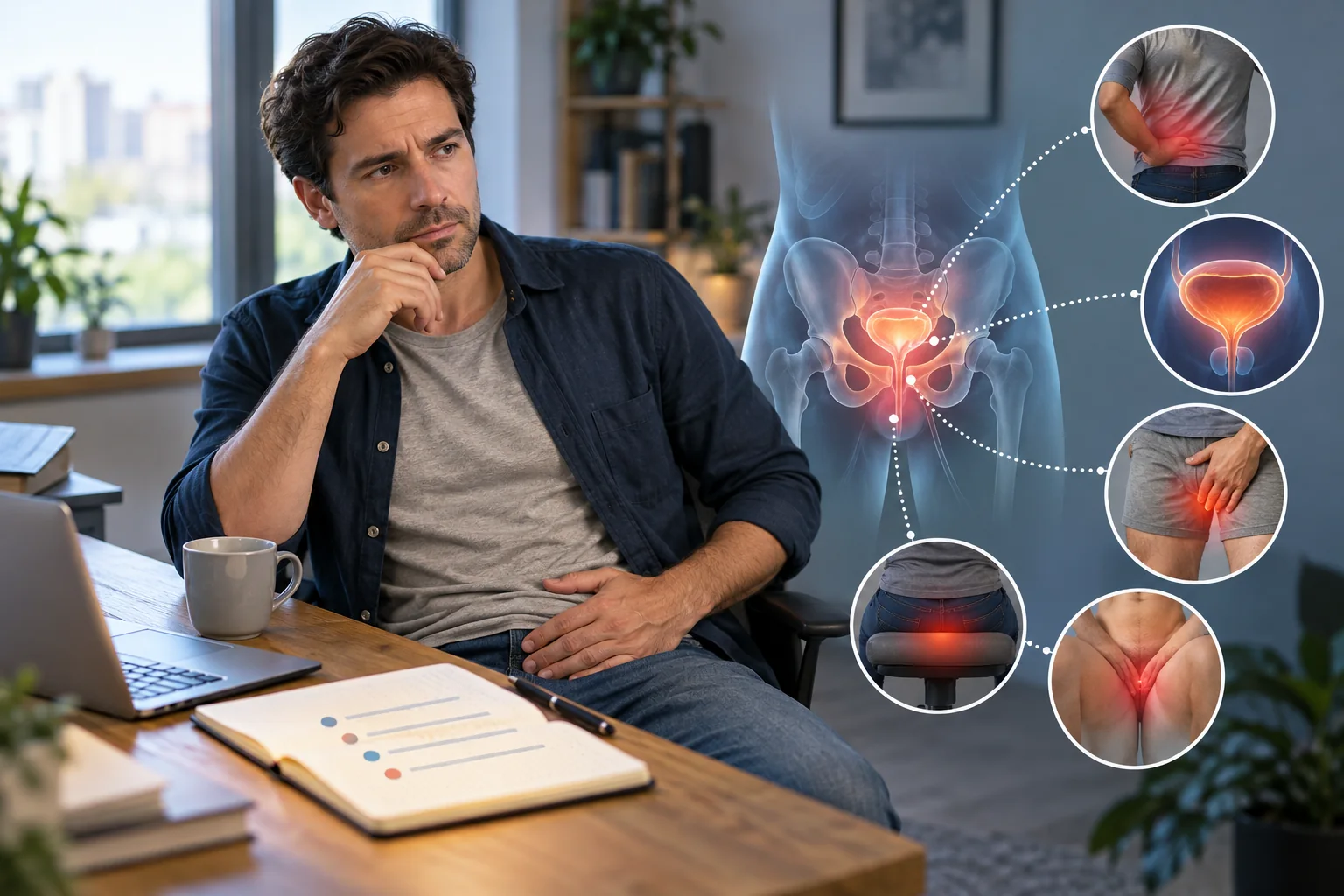
Male pelvic pain is not a riddle solved by pointing to one spot. Sensations from the prostate, bladder, muscles, nerves and nearby tissues can overlap. A symptom map is not a home diagnosis; it simply gives a clinician less fog to walk through.
Divide a page into location, urination, sexual symptoms, activity and whole-body symptoms. Record three to seven days, including what changes rather than only the worst episode.
Pain that moves is still real. Chronic pelvic pain can resemble several smoke alarms sharing one circuit: the kitchen, hallway and bedroom all sound, so the job is to inspect the system rather than smash the loudest alarm.
- Location: perineum, penis, testicles, above the pubic bone, groin or lower back.
- Urination: urgency, frequency, burning, a weaker stream or incomplete emptying.
- Sex: pain during or after ejaculation.
- Activity: changes after sitting, cycling, bowel movements, stress or exercise.
- Whole body: fever, chills, nausea or blood in urine.
When waiting is the wrong experiment
Seek immediate care for complete inability to urinate, or painful urgent urination with fever and chills. Blood in urine and severe lower-abdominal or urinary-tract pain also need prompt attention. Bacterial prostatitis and chronic pelvic pain syndrome are treated differently; an online symptom list cannot justify self-prescribed antibiotics.
Symptoms lasting three months, recurring, or disrupting sleep, work or sex deserve a urology assessment. A clinician may check for infection and prostate, bladder or other causes. A pelvic health physical therapist can assess excessive muscle tension or poor coordination and whether breathing, hips and posture contribute.
Do not use Kegels as a pain button
| Observation | What it helps you discuss | What it does not prove |
|---|---|---|
| Sitting worsens it; walking eases it | Whether posture and muscles contribute | That the prostate cannot be involved |
| Pain follows ejaculation | Timing between symptoms and sexual function | That an infection is present |
| Urgency comes with perineal pain | Whether urinary and pelvic assessment both matter | That more Kegels will solve it |
Pain does not automatically mean weakness. If muscles are already guarding, repeated hard contractions may keep the “fist” closed longer. Comfortable breathing, brief walking breaks and changing long sitting periods are low-risk observations while you follow professional advice. Stop any movement that clearly increases pain.
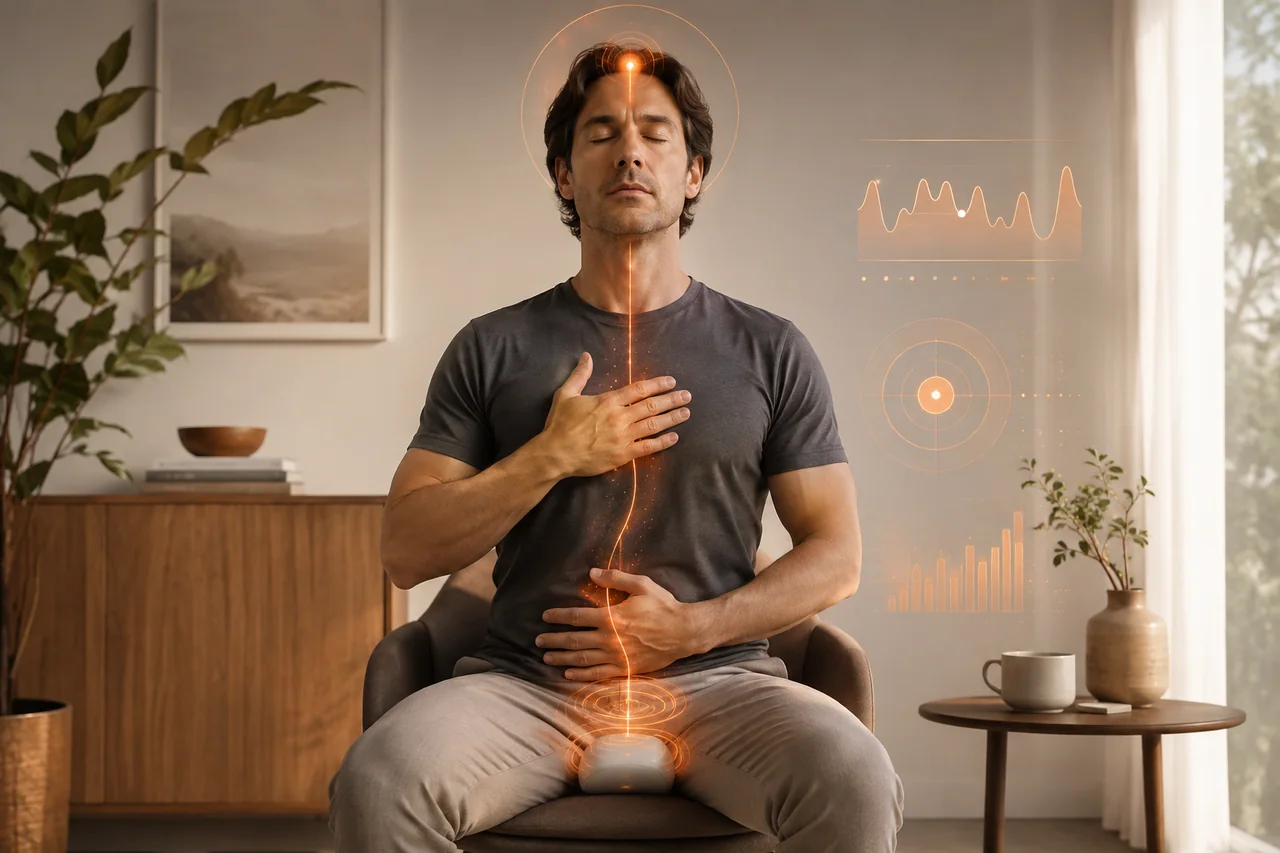
Only when active pelvic floor training has been assessed as appropriate should HOSFU Gen4 enter the plan. Its fully clothed seated pressure feedback can help observe contraction and release. It cannot distinguish infection, prostate disease or nerve problems, and pain is never a reason to force a better graph.