
Why isn't a hard squeeze a universal brake?
You may have read that squeezing your pelvic floor as hard as possible just before ejaculation will stop it. That sounds like pressing a button. Real life is closer to driving: sensations, attention, tension and both partners' pace keep changing. One forceful squeeze is not a universal brake, and it may feel worse if you are already tense.
Pelvic floor training can have a place in care for premature ejaculation, alongside options such as behavioral approaches, medicines and counseling. But a 2026 systematic review of five studies did not establish that training alone is better than other treatments, and the studies varied considerably. ‘Some people benefit’ does not mean a generic exercise sheet will add a predictable number of minutes.
1. Can you contract gently—and release completely?
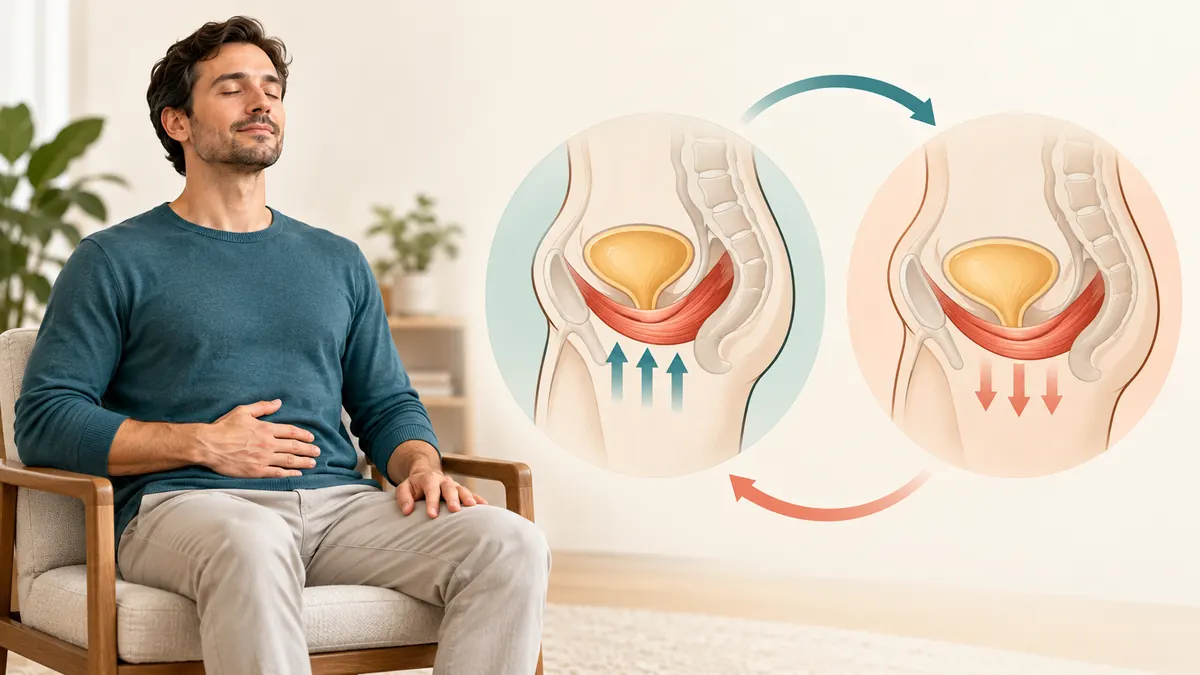
At an ordinary, unpressured moment, try noticing a small inward and upward lift. Breathe normally and avoid gripping your buttocks or thighs. Give yourself time to release before the next attempt. If you only know maximum effort and cannot find the off switch, do not add intensity yet. Pelvic pain, difficulty urinating or lingering tension after practice are reasons to ask whether strengthening is appropriate in the first place.

2. Is practice building awareness or adding pressure?
You can log dozens of contractions while becoming more anxious about the stopwatch. Try noticing something different: can you keep breathing, release fully, and communicate with your partner about slowing down? These are observations, not diagnostic scores, but they can make a conversation with a professional more useful.
Other options include behavioral approaches such as stop-start, counseling and medicines, depending on your circumstances. Embarrassment does not have to leave you relying on one exercise or one device.
3. How long has this been bothering you?
An occasional experience that does not go as you hoped is not, by itself, a diagnosis. If the problem recurs, causes ongoing distress for you or your partner, or comes with erection difficulties, pain or other symptoms, talk with a urologist, sexual health clinician or qualified pelvic floor therapist. Note when it began, how often it happens, other symptoms and what you have tried. You will not have to find all the words during the appointment.
Research on rehabilitation is not proof that a product treats premature ejaculation.
Clinical studies may involve therapist-led, combined treatment programs. They have not tested HOSFU Gen 4 or established that its warmth and vibration treat premature ejaculation. Home pressure feedback also cannot, by itself, confirm correct technique.
The goal is not to discover a magical braking maneuver. It is to understand your body better, stop forcing an unhelpful movement and get suitable support when you need it.
If keeping up a practice routine is the difficult part
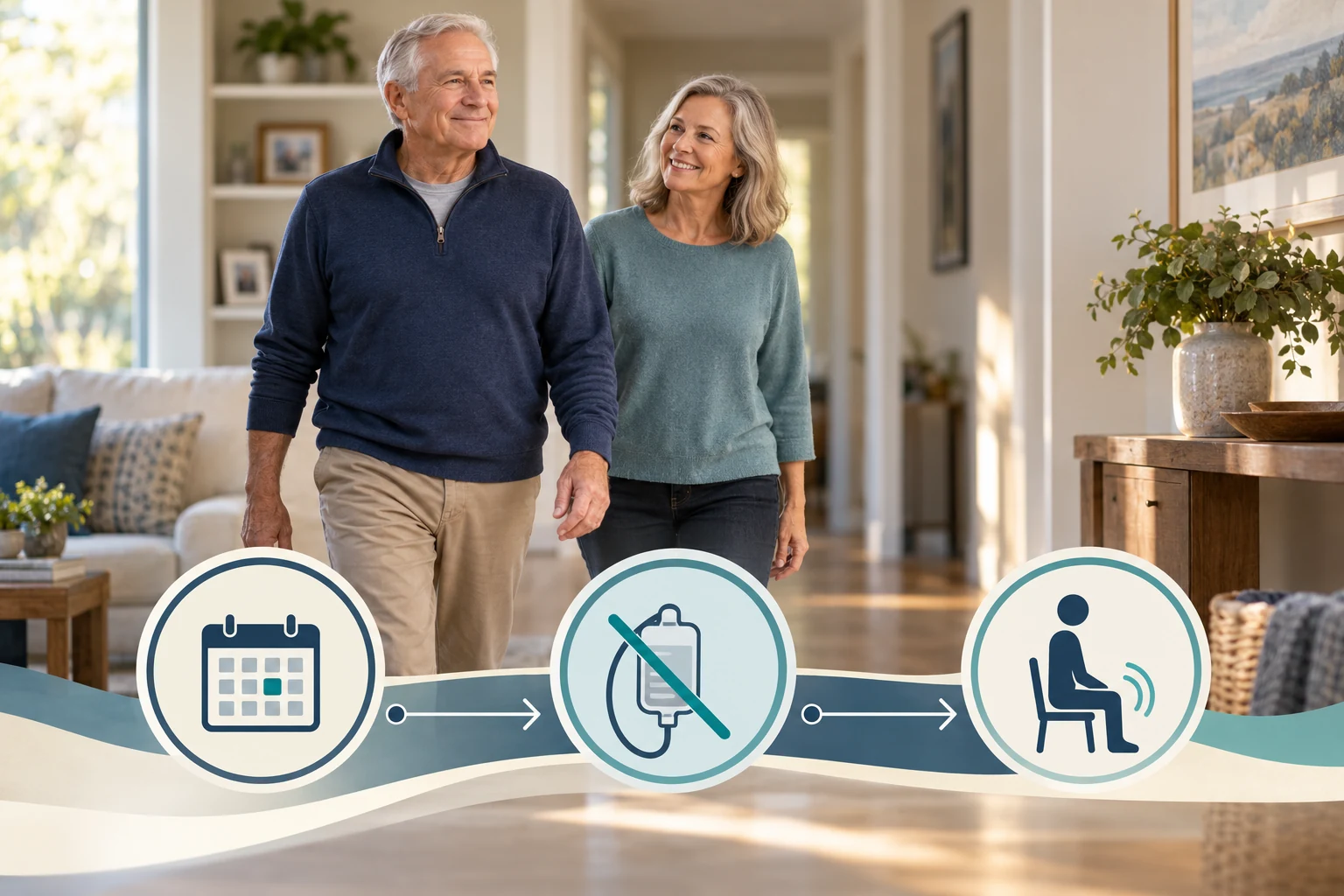
If active practice is appropriate for you, HOSFU Gen 4 lets you follow app-guided sessions while seated and fully clothed, observing pressure changes during contraction and release. Its separate comfort mode provides warmth and vibration; that is not the same as muscle strengthening or treatment for premature ejaculation. Think of it as a practice aid, not a scorecard for your relationship.
This article is general education, not an individual diagnosis or treatment plan. The cited medical sources have not tested or endorsed HOSFU products.