
Try a two-note test
Here is a way to sort the question before you choose an exercise: notice when the trouble happens, then discuss bladder training, pelvic-floor practice, or another cause with your clinician.
On note A, write: “I suddenly need the bathroom before I get there.” On note B: “I leak a few drops when I cough or jump.” A points toward a conversation about timing and urge strategies; B toward muscle control. Both true? Bring both notes. This is not a home diagnosis. It simply keeps one exercise from becoming the answer to every symptom.
First, name the moment that troubles you
Does urine escape when you cough or lift, or does a sudden urge send you running even when the bladder may not be very full? Some people have both. A three-day bladder diary can reveal patterns you cannot remember in an appointment: how often you go, what you drank, what the urge felt like, and when leaks happened. It does not diagnose the cause, but it gives your clinician a better starting point than “all the time.”
If you have blood in your urine, painful urination, fever, new difficulty emptying, or a sudden major change, arrange medical advice rather than starting an internet training schedule. Complete inability to pass urine needs urgent care. Continue any fluid or medication instructions you already have.
Bladder training works on the clock, not on holding as long as possible
| What you practise | What you observe | What it does not prove |
|---|---|---|
| A manageable bathroom schedule | Time between visits, urgency, leaks | That your bladder was damaged or “too small” |
| An agreed urge-control pause | Whether the urge settles enough to reach a toilet | That everyone should hold longer |
| A separate pelvic floor contraction and full release | Whether you can identify the movement comfortably | That a bigger sensor number means a better bladder |
Imagine the diary shows you usually visit the toilet every hour, including trips taken “just in case.” A bladder-training plan might start from your current pattern and gradually change the interval. The aim is to practise a manageable schedule, not to win a contest with a desperate urge. NIDDK describes timed voiding and gradual lengthening of intervals as options a health professional can tailor using a diary. NHS guidance commonly describes a bladder-training course lasting at least six weeks for urgency incontinence.
While waiting for a planned time, stop moving for a moment, settle your breathing, and use the urge-control strategy your clinician recommends. An urge can rise and fall like a wave; you are not required to “surf” through pain or a frightening level of urgency. If the plan repeatedly makes you leak, hurt, or fear leaving home, the interval or even the diagnosis needs review. Do not sharply restrict water to make a neat-looking diary.
Kegels work on a different skill
A pelvic floor contraction is a gentle lift followed by a complete release. It can be useful for some types of urine leakage and may be part of an urgency plan. NIDDK notes that quick contractions can sometimes help suppress an urgent feeling. But the exercise itself is not a replacement for a bladder-training schedule, and repeating it harder is not the answer to every rush to the bathroom.
If contracting brings pain, increased gripping, or trouble emptying, stop and ask for individual guidance. The same symptom word—“urgency”—can accompany different problems. Someone with bladder pain, for example, may need a different pelvic floor approach. A home pressure curve cannot tell you which condition you have.
Put the two practices on separate lines
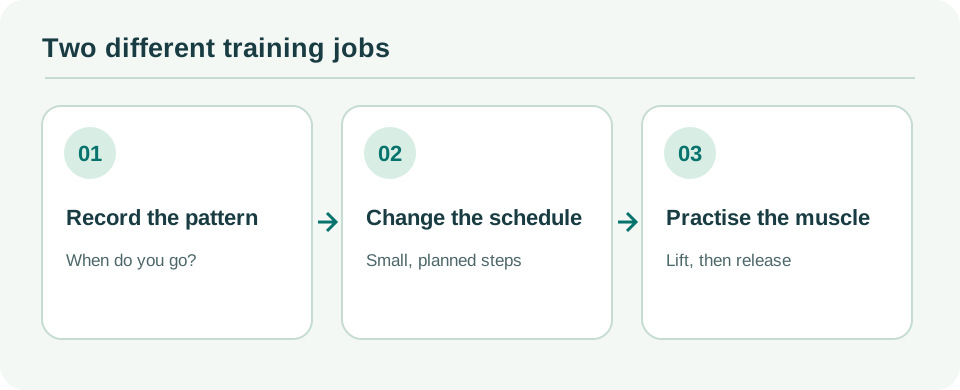
For a week, write down three things: the planned bathroom interval if one has been agreed, the actual visits and urge episodes, and whether your separate muscle practice felt comfortable. This prevents an easy mix-up: “I did a good set of exercises” is not the same as “my urgent trips changed.” If your pattern improves, you can show the clinician what changed. If it does not, you have useful evidence for adjusting the plan rather than blaming yourself.
The small win is clarity. When the rush happens, you know whether you are following an agreed bladder schedule, using an urge strategy, or practising a muscle skill at another time. Each has its own job.
If active pelvic floor practice is part of your plan, HOSFU Gen4 can provide a fully clothed, seated routine with pressure feedback for contractions and releases. It does not train your bladder schedule or diagnose the reason for urgency; keep the diary and your clinician's plan in charge.