
Try the “change one drink” experiment
Instead of saying goodbye to half the menu, try an observation small enough to keep. It cannot diagnose you, but it can turn a vague suspicion into something worth discussing.
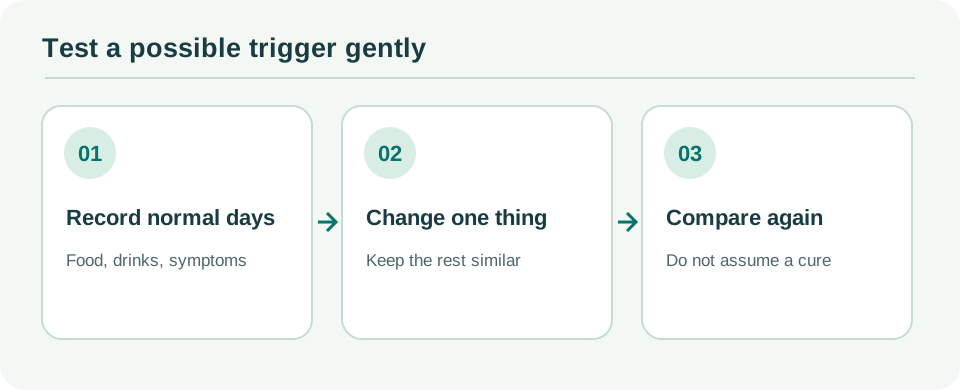
Record a few ordinary days of drinks, bathroom trips and urgency. If afternoon coffee is your suspect, adjust only that cup while keeping the rest of the routine as similar as practical. Then compare similar days. Changing five foods at once is like switching off five lamps and trying to work out which one was too bright. Follow any existing medical limits on fluids or diet.
Begin with what actually happens on an ordinary day
For a few days, note drinks, approximate amounts, bathroom trips, urgent feelings, and leaks. You may already have a bladder diary; add food or drink notes only when you suspect a link. Write down sleep, travel, medication changes, or a stressful shift if they obviously changed too. The goal is to notice patterns, not to produce a perfect scientific study in your kitchen.
If you drink three coffees before noon and feel urgent in the afternoon, coffee is a reasonable candidate. It is not a verdict. The amount of liquid, caffeine, timing, poor sleep, and other changes might all matter. Likewise, a single spicy dinner followed by one urgent trip cannot prove that chilli is the cause.
Change one thing you can live with
| Instead of… | Try asking… |
|---|---|
| “Never eat tomatoes again.” | “Did tomato-based meals repeatedly coincide with symptoms for me?” |
| “Drink almost nothing before leaving home.” | “Am I drinking a reasonable amount under my care plan?” |
| “One bad day proves the culprit.” | “Does a similar pattern appear on several comparable days?” |
Pick the most plausible candidate and make a modest change while keeping the rest of your routine as steady as practical. Someone who drinks a lot of caffeine might gradually swap one cup rather than stop suddenly and develop a withdrawal headache. Another person might compare a fizzy drink with still water at a similar time. If symptoms change, discuss the pattern with a clinician or dietitian; if appropriate, a careful reintroduction can help you see whether the link repeats.
Do not deliberately dehydrate yourself. NIDDK advises asking your health professional about the right amount and timing of fluid; needs differ with health, activity, and climate. Too little fluid can also complicate bowel habits. If you have a prescribed fluid limit because of another condition, follow that plan rather than general internet advice.
Know what a food test cannot answer
An elimination experiment does not diagnose overactive bladder, a urinary infection, bladder pain syndrome, or a pelvic floor problem. Blood in the urine, painful urination, fever, inability to empty, or persistent unexplained changes warrant medical advice rather than another week of swapping beverages. NIDDK's interstitial cystitis guidance also describes food-trigger diaries for that specific condition; do not assume every urgent bladder has the same cause or food response.
The useful output is a short sentence you can take to an appointment: “On days with this drink at this time, urgency seemed more frequent; when I changed one thing, here is what happened.” That is more informative than a list of everything you have stopped enjoying.
Food experiments and pelvic floor practice answer different questions. If your clinician has separately recommended active muscle training, HOSFU Gen4 can support a fully clothed seated routine with pressure feedback. It cannot identify food triggers or replace your symptom diary; keep those records separate.