
Use a small pack for a walk-and-sit check
This is not advice to put up with leaks. Make today easier, then use what you notice to investigate the cause.
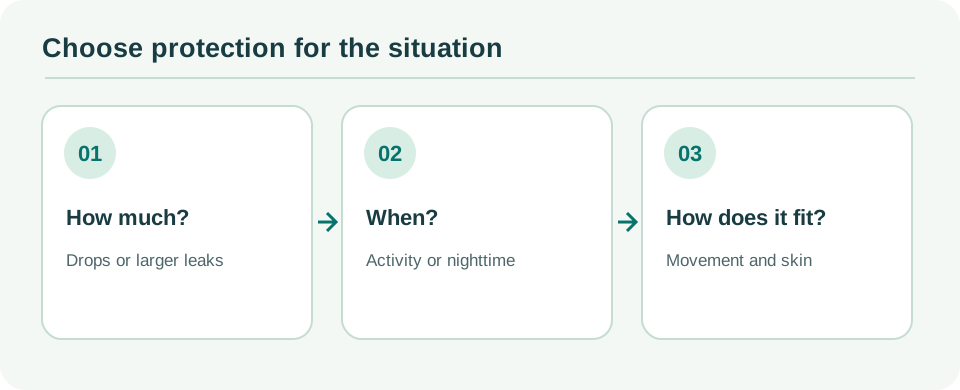
Walk, sit and stand; notice whether the edge moves or rubs. After a leak, check whether the pad was soaked or nearly dry while fluid escaped at the side. The first may call for a different capacity; the second suggests checking size, shape and placement first. Nighttime and exercise may need different protection. You are choosing for a situation, not grading how “severe” you are.
Match the product to the event, not the embarrassment
| Your situation | A practical comparison |
|---|---|
| A few drops during coughs or exercise | Thin urine-absorbent pad; check movement and edge comfort |
| Unpredictable larger leaks | Higher absorbency or pull-up underwear; check fit while walking |
| Leakage at night | Nighttime option or washable bed protection, without assuming daytime fit will work |
| Skin feels sore | Change wet products promptly and ask a clinician about skin care |
For occasional small drops, a thin incontinence pad may be enough. For a larger or less predictable episode, absorbent underwear or a higher-capacity product may feel more secure. Overnight protection may need a different shape or bed protection. Products sold for menstruation and those designed to manage urine do different jobs; compare a product's intended use and absorbency rather than assuming the familiar packet is equivalent.
Try a small pack before committing to a case. Check whether it stays in place when you walk and sit, whether edges rub, and whether the amount you actually leak exceeds its capacity. The right fit can matter as much as the absorbency number. If leaks escape around the side despite a nearly dry pad, sizing or placement may be the problem. If the pad is repeatedly saturated, you may need a different product and a clinical discussion.
Protect skin without over-cleaning it
Urine held against skin can cause irritation. A product that draws moisture away from the surface and fits properly may help keep skin drier. Change it as directed and when wet, cleanse gently, pat dry, and avoid repeatedly scrubbing with strongly scented products. If you have persistent redness, broken skin, pain, or signs of infection, seek advice. A larger pad alone will not treat irritated skin.
Be wary of a different shortcut: NHS guidance does not recommend routinely using tampons to manage urinary incontinence. An occasional product choice for a specific activity belongs in an individualized discussion, not a general “hack” to replace assessment.
Use protection to buy time for a useful next step
Notice when the pad becomes wet: during a cough, just before a toilet, after voiding, or during sleep. Those patterns can point to different conversations. A pad count alone does not diagnose anything, but noting the event and approximate amount can help a clinician choose a plan. Keep a short bladder diary if symptoms are frequent. Treatment may include lifestyle changes, bladder training, pelvic floor muscle training, or something else depending on the type of leakage.
It is perfectly reasonable to keep using protection while a treatment plan takes time. You do not need to “earn” dry underwear by doing enough exercises. The goal is comfort today and better information about tomorrow.
If your care plan includes active pelvic floor contractions, HOSFU Gen4 offers a fully clothed seated practice routine with pressure feedback. It will not replace a pad, identify the cause of leakage, or guarantee dryness; it may help you follow a suitable training plan alongside the practical protection you need.