
Before you leave, write down your hardest five minutes
Think of the appointment as drawing a map together, not passing a body test. You bring the moments that actually interrupt your day; the therapist helps turn them into a next step.
Don't just write “leaking” or “pain.” Make it a scene: “By the third subway stop I am looking for a bathroom,” or “A few drops escape when I lift my child.” Add when it began, what you tried, and what you want back. One small note beats searching for perfect medical language in the room.
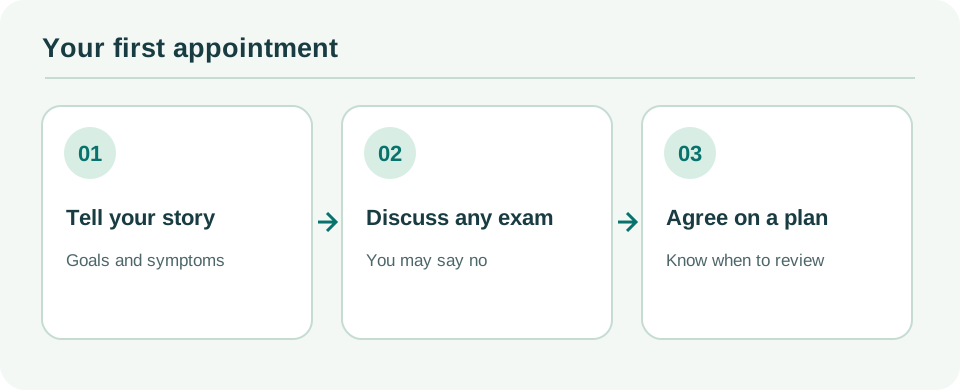
Bring the ordinary details, not a perfect theory
A clinician may ask about bladder habits, bowel movements, pain, sexual function, surgery, medicines, exercise, and how symptoms affect work or sleep. These questions can feel personal. Their purpose is to tell apart problems that need different care. You can say, “I am not sure,” or ask why a question matters. A short symptom timeline, your medicine list, and a bladder diary if urinary symptoms are central can be more useful than arriving with a self-diagnosis.
Choose one priority in your own words. “I want to get through a work meeting without planning the nearest toilet” is a clearer goal than “fix my pelvic floor.” It gives you and the therapist something meaningful to revisit.
An internal examination may be offered; it is not an entrance fee
Depending on symptoms and the service, a therapist may discuss an external movement check or a vaginal or rectal examination. An internal check can provide information about how muscles contract, release, and coordinate, but it may not be right for every person or every first appointment. NHS pelvic health guidance says the clinician should explain the reason and what will happen, and you may decline or change your mind. You can ask whether a different assessment can happen first, whether a chaperone is available, and what information would be lost by waiting.
This is your body, not a surprise test. Consent is a continuing conversation. Declining one examination does not mean you have declined all care. The therapist can still discuss symptoms, explain possible next steps, and help you decide what you are comfortable doing.
A good plan should name the problem it is trying to solve
| Ask at the appointment | What a useful answer sounds like |
|---|---|
| What is your working explanation? | A plain description of the likely mechanism and what remains uncertain |
| What should I practise at home? | One or two specific actions, including the release or rest phase |
| What should make me stop or call back? | Symptoms and a realistic contact or follow-up plan |
| When do we review? | A date or criterion for changing the plan if it is not helping |
After assessment, the plan might involve learning a contraction, learning to release, changing toilet habits, adjusting an activity, or referral for another evaluation. “Do Kegels” is incomplete if you do not know why, how to tell whether you are using the right muscles, what discomfort means, and when to review progress. For some people with pelvic pain or difficulty relaxing, simply adding more contractions may make the wrong task louder.
Make home practice fit the assessment
Royal United Hospitals Bath notes that a treatment program can be developed for home use after the first assessment. That matters: home practice is not a one-size-fits-all video you must perform before anyone listens. If your therapist recommends active pelvic floor contractions and you are comfortable doing them, ask whether feedback would help you stay consistent, and what a sensor reading can or cannot tell you. If relaxation is the priority, say so before buying a strengthening tool.
The best souvenir from the first visit is not a perfect score. It is a plan you can explain back: “Here is what we think is happening, here is what I will try, and here is when we will rethink it.”
For a plan that includes active seated practice, HOSFU Gen4 offers fully clothed pressure feedback and a separate heat-and-vibration comfort mode. It cannot perform an assessment or replace your therapist's instructions; it is worth considering only if its job matches the plan you agreed on.