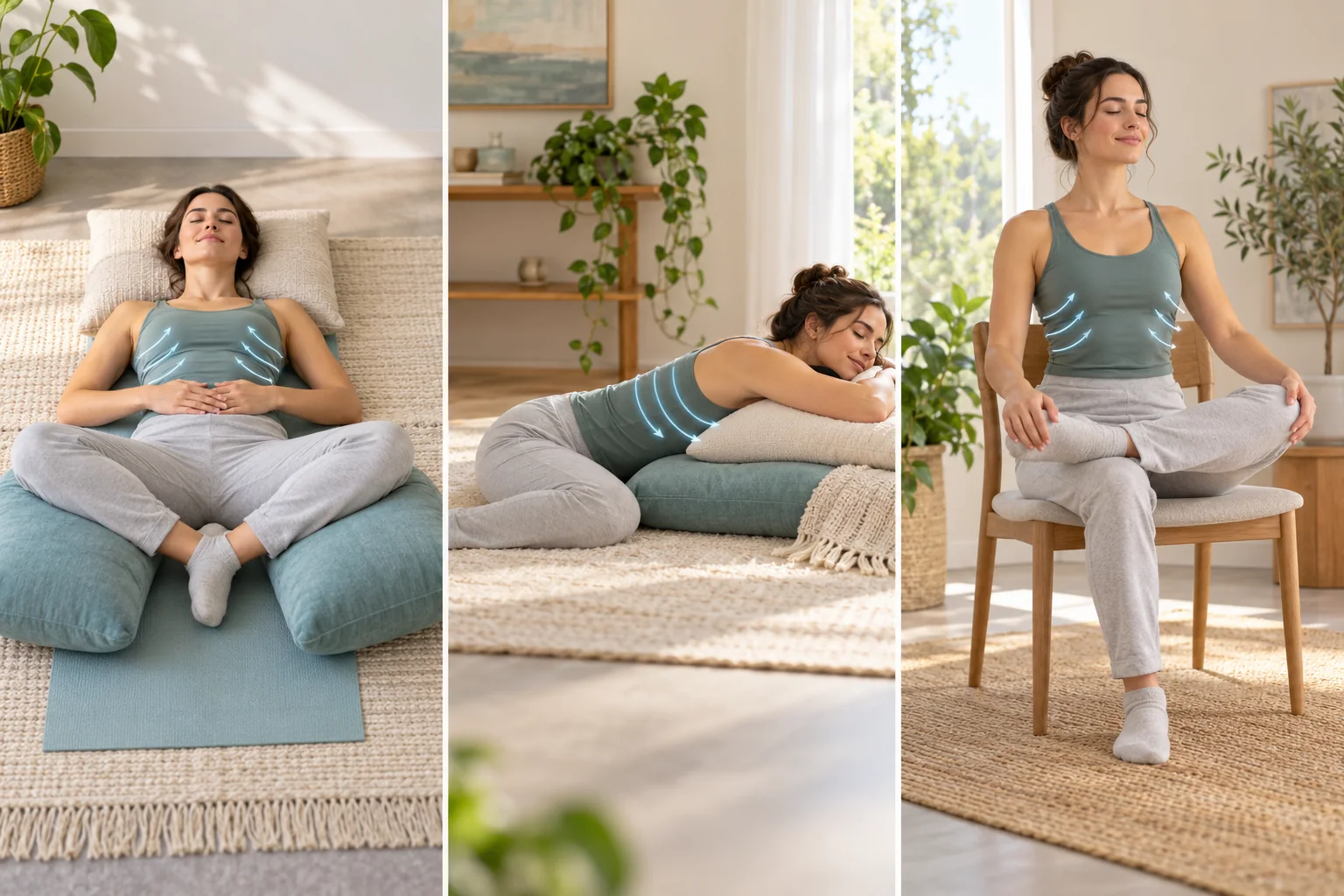

Why does a change of position change what you feel?
Imagine listening to quiet music in an empty room: you can pick out the drumbeat. Walk into a busy restaurant and the beat has not disappeared; it is just harder to hear. Moving from lying down to standing can feel similar. Your trunk, buttocks and legs are now helping you balance. In trying to get the exercise right, you may tense everything at once.
Instead of asking which position is best, ask a more useful question: Where can I tell a contraction from a release? Kegels can be practiced lying down, sitting or standing. The important distinction is between the pelvic floor movement and tension in your stomach, thighs or buttocks.
Try a signal check before changing positions
Get comfortable and breathe normally. Imagine gently holding back gas, without holding your breath. Feel a small inward and upward lift, then let it go completely. Three gentle attempts can help you observe the movement; this is a check, not a prescribed exercise dose. Ask yourself:
• Can I find the lift? It should feel like a small inward squeeze, not a forceful push down into the seat.
• Am I still breathing? If you are holding your breath, ease off the effort.
• Can I let go? A repetition includes both the contraction and a noticeable return to rest.
When those three things are clear, try another position. If the new position leaves you squeezing your buttocks, gripping your inner thighs or bracing your stomach, go back a step. You are tuning in to the signal again, not failing the exercise.
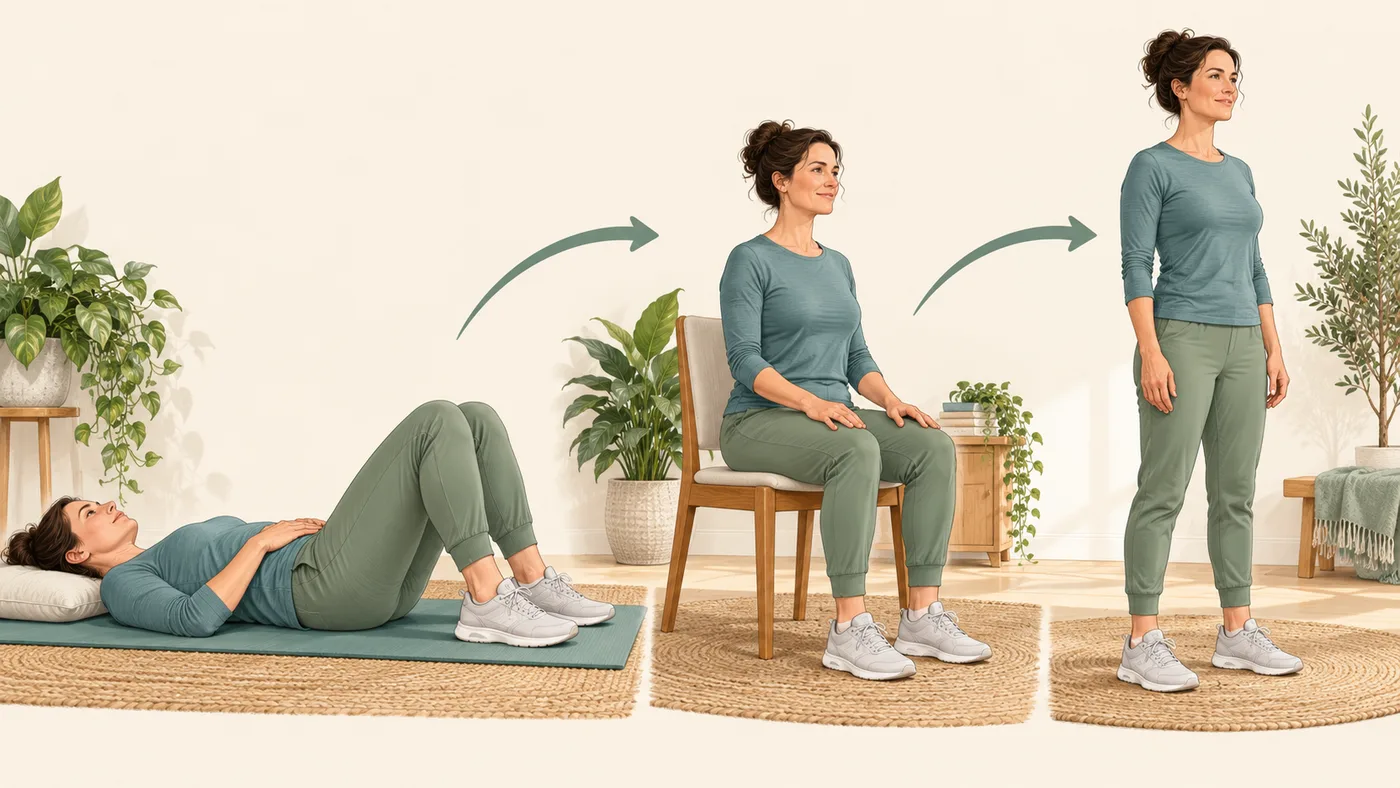
Three positions, three misleading signals
Lying down: A bed or mat supports your body, which can make a small movement easier to notice. But pressing your lower back into the surface and tightening your stomach can create a strong sensation without telling you what your pelvic floor is doing. Keep your knees and shoulders comfortable and try less effort.
Sitting: A stable seat can fit practice into the working day. Keep your feet flat. If a pressure-feedback curve rises when you lean forward, the change may come from shifting your weight. A pressure reading can show a change; it cannot, by itself, prove a correct muscle contraction.
Standing: This brings practice closer to everyday activities, but can also invite buttock squeezing and breath-holding. Make sure you can still distinguish the movement before adding activities. Do not hold an invisible Kegel all day.
Do not test a harder position through pain.
Stop and seek advice if practice causes pain, pelvic pressure or noticeably worse urgency. If you are recovering from childbirth or surgery and are unsure what is appropriate, ask a qualified pelvic health professional. A change of position cannot replace an individual assessment.
The useful skill is being able to switch off, too
Think of a door: it needs to close when needed and open again afterward. If you can tighten but cannot let go, work on the release before making the exercise harder. A useful practice note might say: ‘Sitting: I can feel both the lift and the release. Standing: I start holding my breath, so I will stay with sitting for now.’ That tells you more about your next step than ‘50 repetitions completed.’
Make seated practice easier to return to
Once you can recognize the movement, HOSFU Gen 4's Professional mode lets you follow app-guided practice while seated and fully clothed, with pressure feedback during contraction and release. It is designed for sitting only, and readings also change with weight and posture. Connect and calibrate first; use the curve as feedback, not a high-score target.
This article is general education, not an individual diagnosis or treatment plan. The cited medical sources have not tested or endorsed HOSFU products.