Begin with three quiet breaths
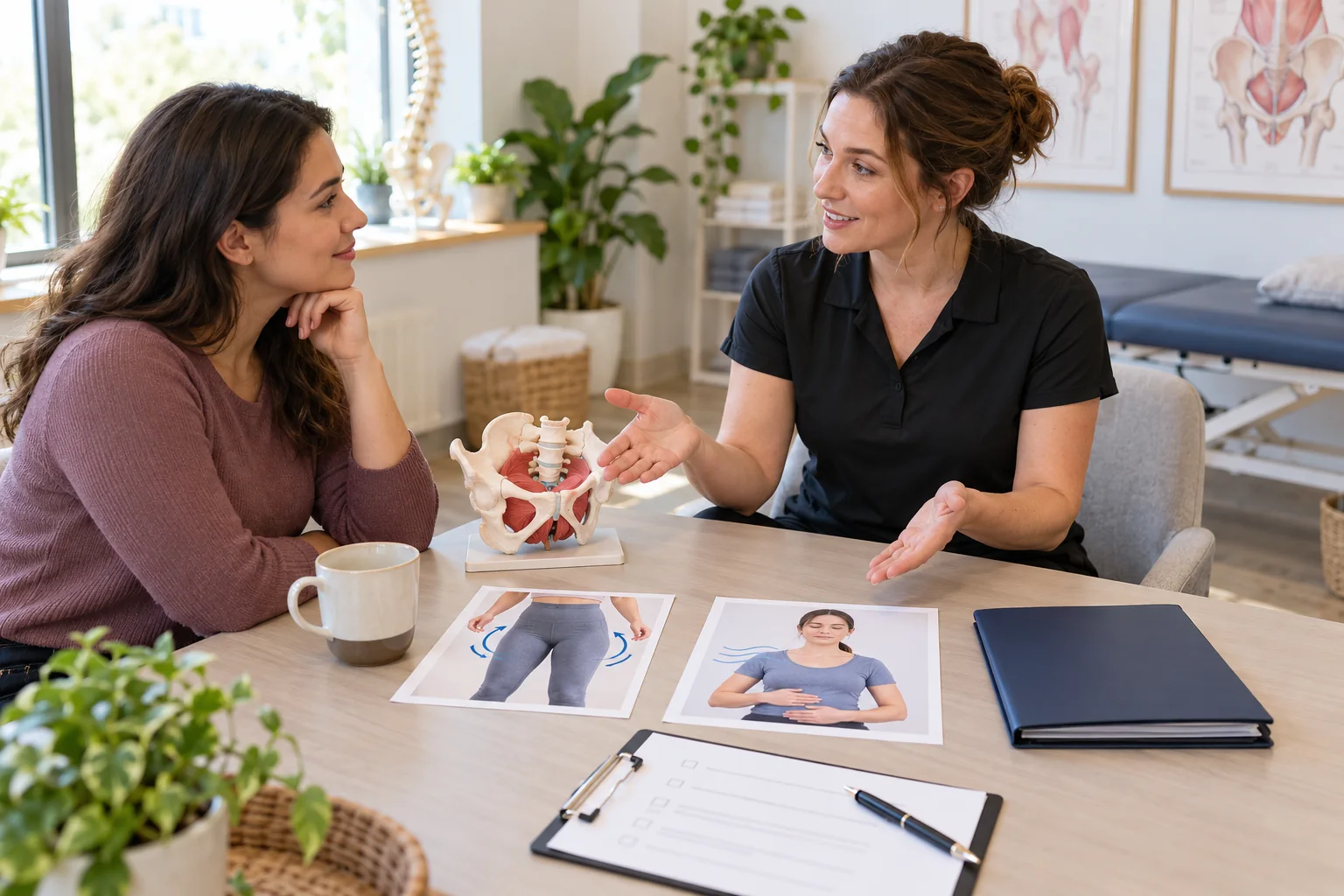
Pelvic floor stretching is rarely about yanking one hidden muscle longer. Breath, hip position and support can create the conditions for the pelvic floor to stop bracing. The short sequence below is an observation exercise, not a prescription for a condition. Pain, pregnancy, surgery recovery or a diagnosed pelvic disorder calls for individual guidance first.
Lie on your back with your knees bent and one hand on the lower ribs. Feel the ribs widen sideways as you inhale. As you exhale, let the jaw, belly and buttocks do a little less work. Do not drive the breath toward the perineum or bear down. The goal is not a dramatic movement; it is noticing whether effort can actually end.
If three breaths increase pain or urgency, or make you dizzy, stop there. Your response matters more than the name of an exercise.
Three positions, scored by comfort rather than range
| Signal after practice | Sensible next step |
|---|---|
| Breathing is easier and gripping is lower | Record which position and duration helped |
| No large change, but it felt comfortable | Keep it as a brief pause; do not force more range |
| Pain, urgency, heaviness or numbness increases | Stop and arrange an assessment |
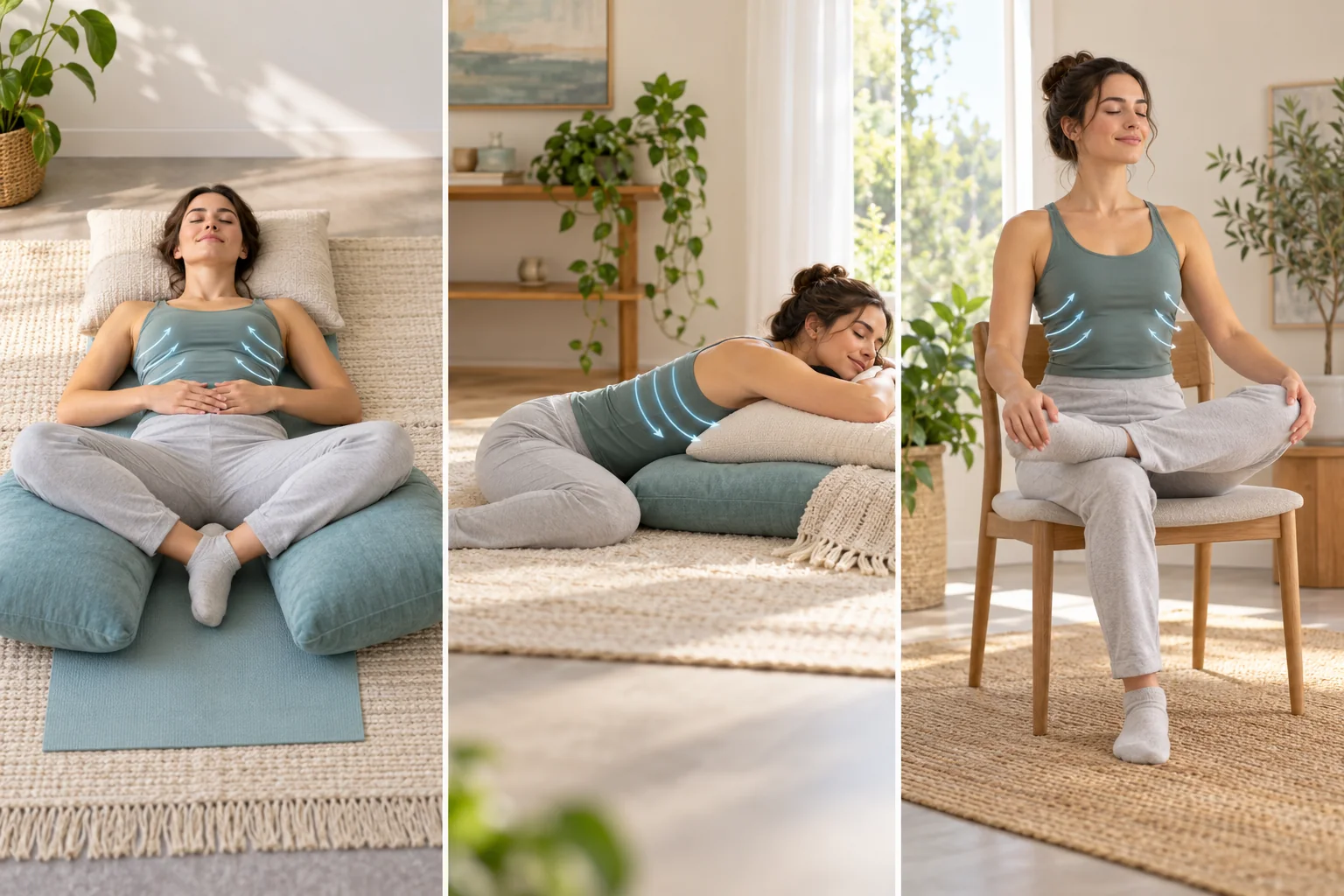
Supported butterfly. Lie down with the soles of the feet together and a pillow under each knee. Let the pillows take the weight instead of forcing the knees toward the floor. Stay for several ordinary breaths.
A supported wide-knee rest. Widen the knees and move the hips toward the heels, with the chest raised on cushions so breathing stays easy. If the knees, hips or back object, return to lying down.
Seated figure four. Sit securely, place one ankle over the opposite thigh, keep the spine long and tip forward slightly from the hips. The sensation belongs in the outer buttock, not as a tug in the perineum.
Keep every position at “I still have room.” A useful stretch turns the radio down; it does not rip the power cord out. Sharpness, burning, numbness or a marked increase in pelvic heaviness are stop signs.
Stretching is not the opposite of Kegels
A capable pelvic floor contracts, releases and changes gear at the right moment for coughing, urination, bowel movements and movement. A floor that only grips resembles a car with an accelerator but no brake or neutral. Chasing maximum looseness is not the answer either. High tone, weakness and poor coordination can feel surprisingly similar, and an internet checklist cannot separate them reliably.
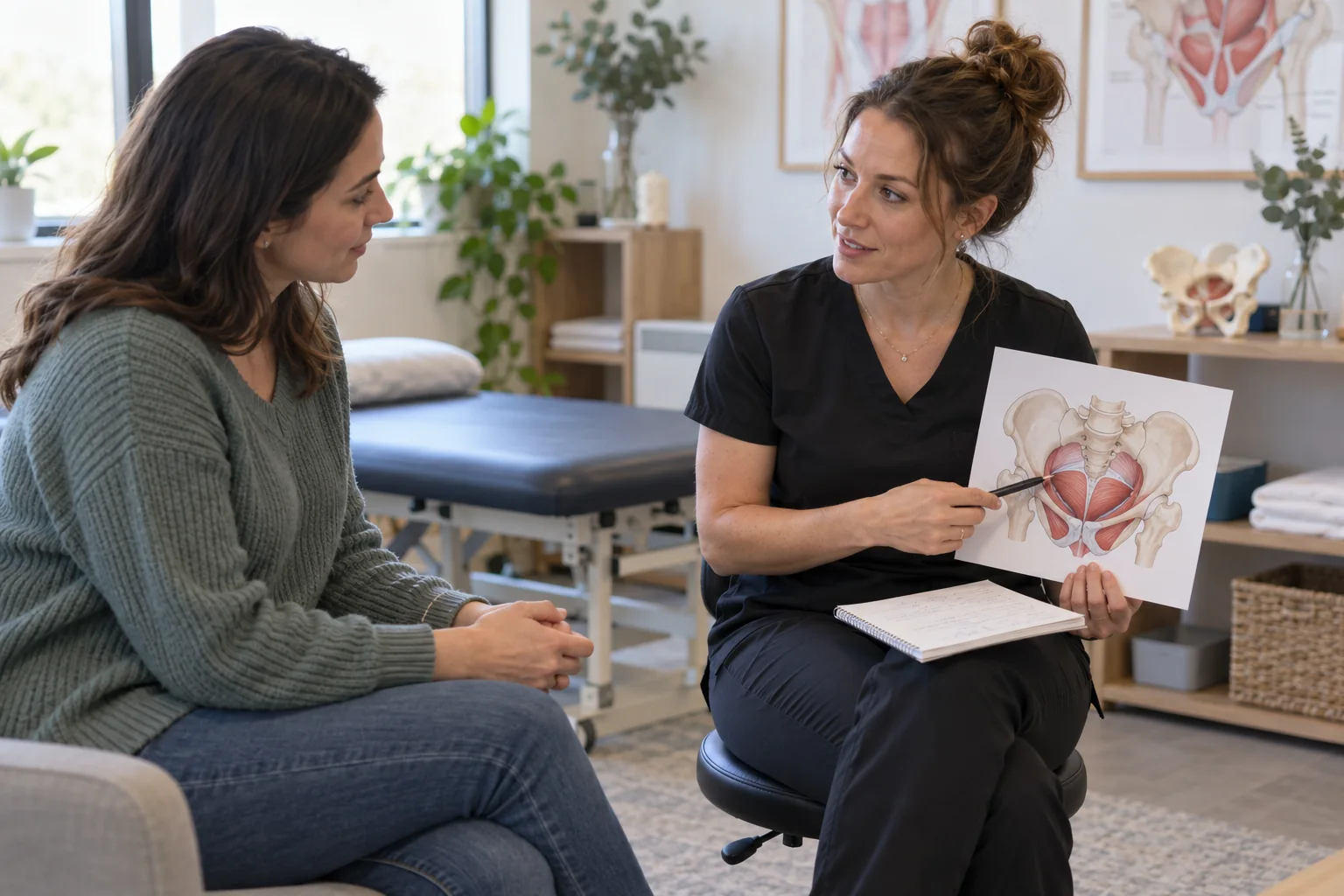
Persistent difficulty urinating or emptying the bowel, pain with sex, recurring pelvic pain, or weeks of practice without direction deserves a pelvic health assessment. Seek prompt care for inability to urinate, fever with urinary pain, blood in urine or sudden severe pain.
Once active contraction practice has been confirmed as appropriate, HOSFU Gen4 can show seated pressure changes across a lift and a full release; its Quick Comfort mode adds warmth and vibration. It cannot diagnose high tone, and pain is never a reason to chase a higher score.