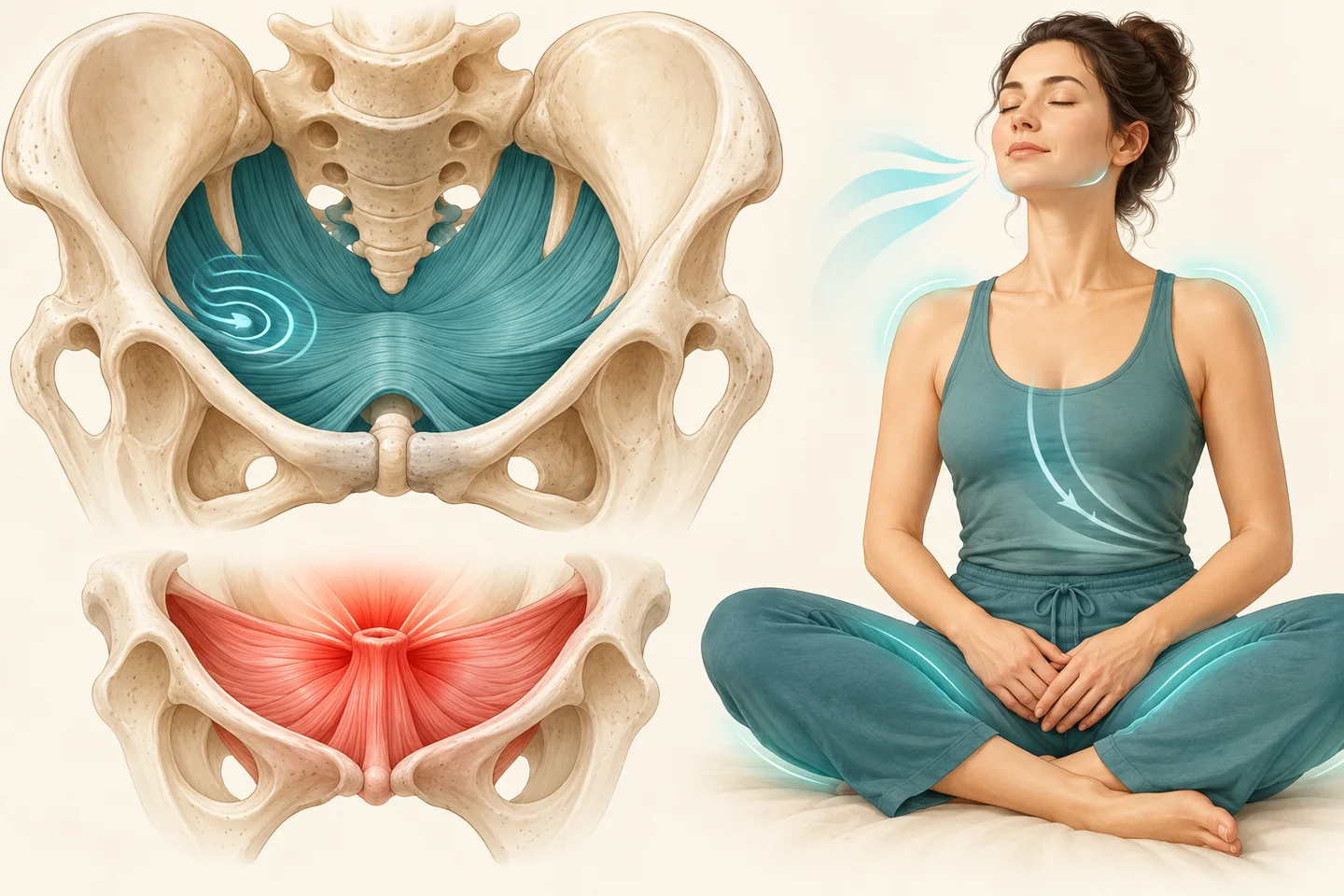

How can tension and weakness coexist?
You leak a few drops when you cough, yet your lower abdomen feels tight in the evening. So you add Kegels during the day and search for reverse Kegels at night. A week later, you are more confused: can muscles really be tight and weak at the same time?
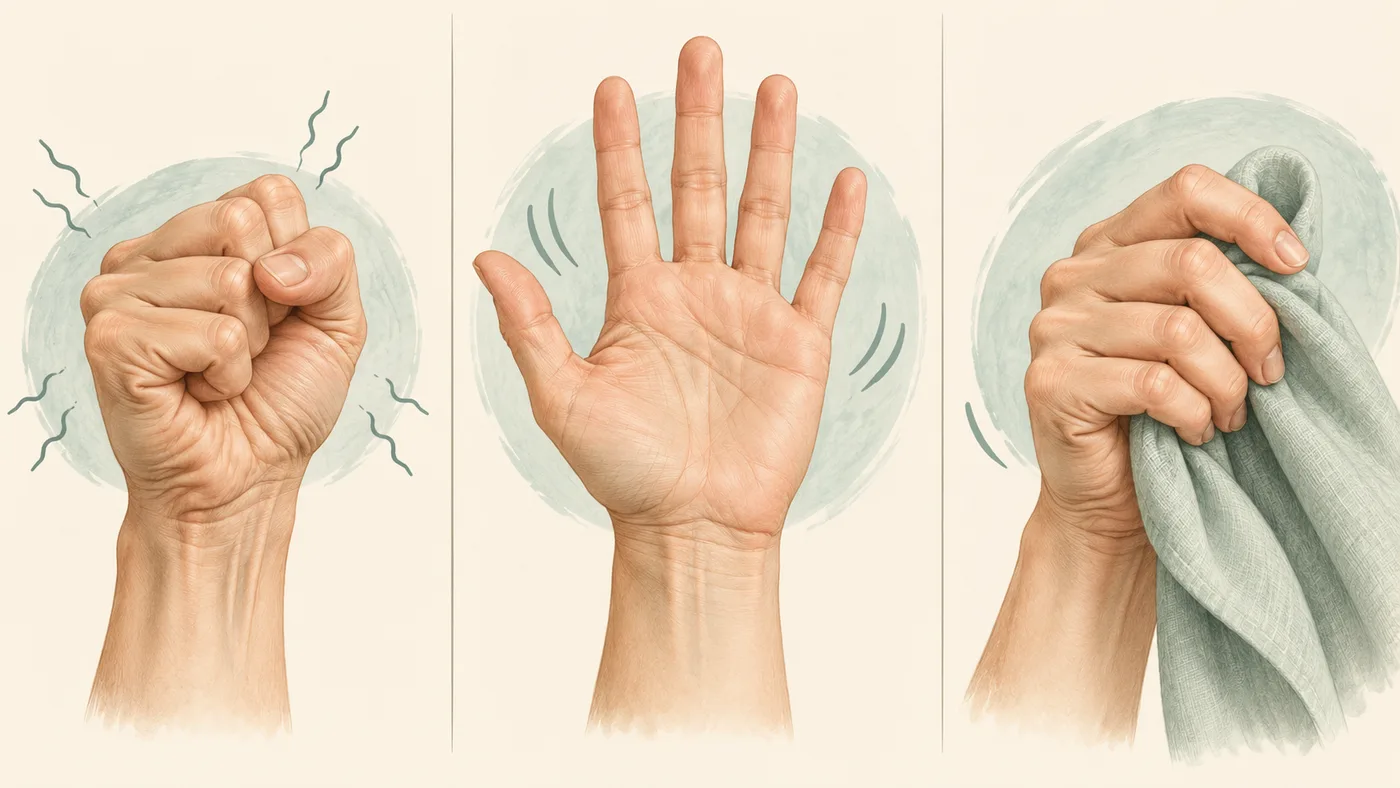
Think of a hand that has been clenched for a long time. It may feel tense and tired, and still struggle to grip something. The analogy explains why tension is not the same as useful strength. It does not diagnose your pelvic floor. Leakage can also involve bladder function, urinary tract conditions, medicines, hormones or other factors that need individual assessment.
Separate the symptoms into three clues
First: when do you leak? Leakage during coughing or jumping and leakage after a sudden, strong urge can point toward different problems. Record the situation before labeling your muscles weak or tight.
Second: what happens when you release? If comfortable, notice one very gentle contraction and the release afterward. Difficulty sensing the release, pain after practice or lasting lower-abdominal tension are useful details to share with a clinician. Leakage is not an automatic instruction to add more repetitions.
Third: what else is happening? Difficulty passing urine or stool, pain with sex and pelvic pain can change the assessment. These can occur with a hypertonic pelvic floor, but they are not enough to diagnose it on your own.
A seven-day note is more useful than an online self-diagnosis
Write three things each day: what happened, what you were doing, and whether practice or rest changed it. For example: ‘Tuesday: a few drops after lifting a water container; no pain; able to release fully during evening practice.’ Or: ‘Thursday: aching after sitting; contractions felt worse; a short walk felt better.’
You are not collecting clues to diagnose yourself. You are turning ‘I seem to have both problems’ into something a professional can assess. A pelvic floor physical therapist can examine contraction, resting tension and coordination; a clinician can also investigate causes outside the muscles.
When should you stop experimenting on your own?
Seek medical assessment for significant or persistent pain, difficulty urinating, blood in the urine, fever, new numbness or weakness, or changing symptoms after surgery or childbirth. Stop any exercise that keeps making symptoms worse and ask for advice.
A product should not decide whether you need strengthening or relaxation
If assessment shows that active training is appropriate, the aim is a clear contraction followed by an equally clear release. If the main difficulty is letting go, work may start with breathing, comfortable positions and relaxation. Constipation, pain or another cause may need attention first. This is an individual decision, not a vote between Kegels and reverse Kegels.
Looking for a comfortable way to build a seated routine?
Once you know what practice is appropriate for you, HOSFU Gen 4 offers two distinct options. Professional mode uses the app to show pressure changes during active practice. Quick Comfort provides warmth and vibration without asking you to contract. Neither mode can diagnose tight or weak muscles, and neither replaces treatment.
This article is general education, not an individual diagnosis or treatment plan. The cited medical sources have not tested or endorsed HOSFU products.