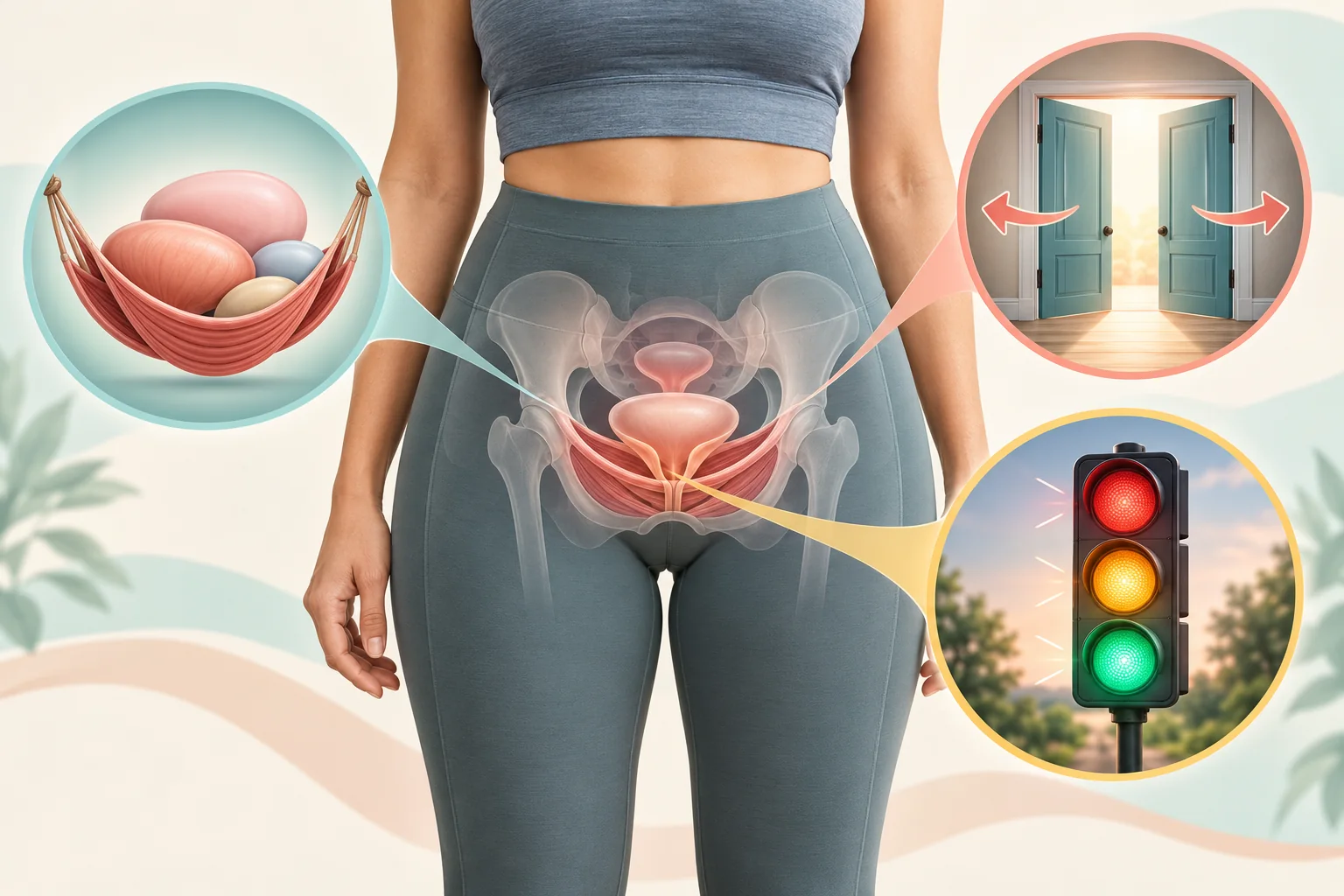
The pelvic floor does more than squeeze
The useful first step is not naming your own diagnosis. It is translating “something feels wrong” into clues a clinician can use.
Picture the pelvis as a small room. The pelvic floor is a hammock supporting its contents, a door that must open for urination and bowel movements, and a traffic light that reacts before a cough or jump. A problem is therefore not always “weakness.” Support may be reduced, the muscles may keep bracing, or strength may be present but mistimed.
Clues can include:
The list cannot tell you which condition you have. It shows why symptoms need their setting: one group of muscles participates in many different jobs.
- urine leakage with coughing, jumping or lifting;
- urgency, frequency, or a sense that the bladder did not empty;
- straining to pass stool or feeling unfinished afterward;
- pain around the perineum, lower abdomen, tailbone, penis, vagina or rectum;
- discomfort with sex, penetration or ejaculation;
- a vaginal bulge, dragging feeling or “tampon not sitting right” sensation.
Describe one episode with four coordinates
| Coordinate | Useful detail |
|---|---|
| Place | Perineum, lower abdomen, tailbone, urethra, inside vagina, penis or testicles |
| Trigger | Coughing, sitting, bowel movement, sex, jumping, a full bladder |
| Time | Sudden or gradual; minutes, hours or days |
| Alongside it | Fever, bleeding, stream change, numbness, bulge, trouble emptying |
Next time, note place, trigger, duration and accompanying change. “The pain is central in the perineum, begins after twenty minutes on a bicycle, eases ten minutes after standing, and comes with urinary urgency” is more useful than “pelvic pain: 7/10.”
A few days of notes is enough. You are looking for a pattern, not turning life into a laboratory.
Signals that should skip “I’ll try exercises first”
Complete inability to urinate, fever or chills with painful urination, blood in urine, or sudden severe pelvic or lower-abdominal pain needs prompt care. New numbness, marked weakness, or a sudden change in bladder or bowel control also deserves urgent assessment. A visible or felt vaginal bulge, or symptoms that keep limiting daily life, belongs in a conversation with an appropriate gynecology, urology or pelvic health professional.
Until you know whether the issue is support, tension or coordination, adding more Kegels may answer the wrong question. Identify the job first; then choose strengthening, release work, bladder training, bowel coordination or another treatment.
If an assessment confirms active training is appropriate, HOSFU Gen4 offers fully clothed seated pressure feedback across a contraction and release. It supplies practice feedback, not a diagnosis; let a qualified professional interpret the symptom map.